
Last updated October 15, 2026
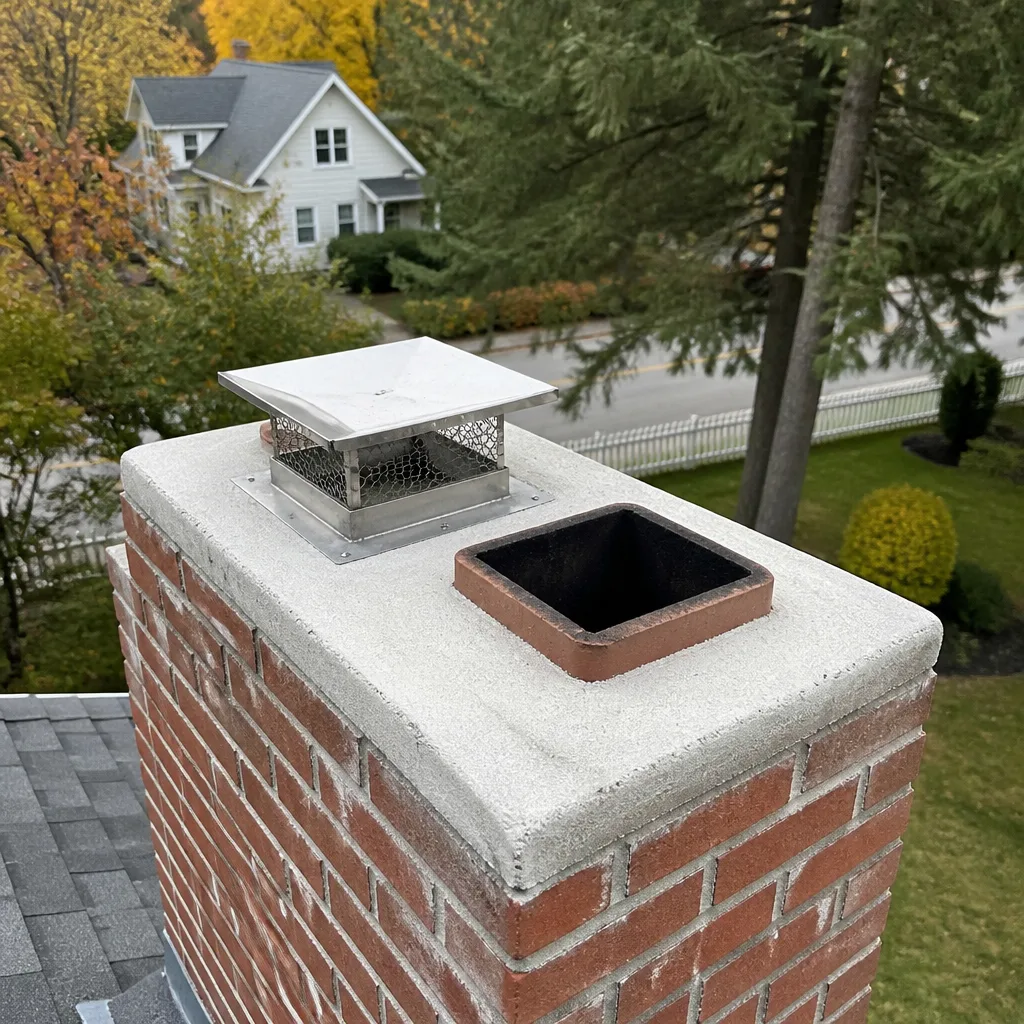 Sweep & inspection
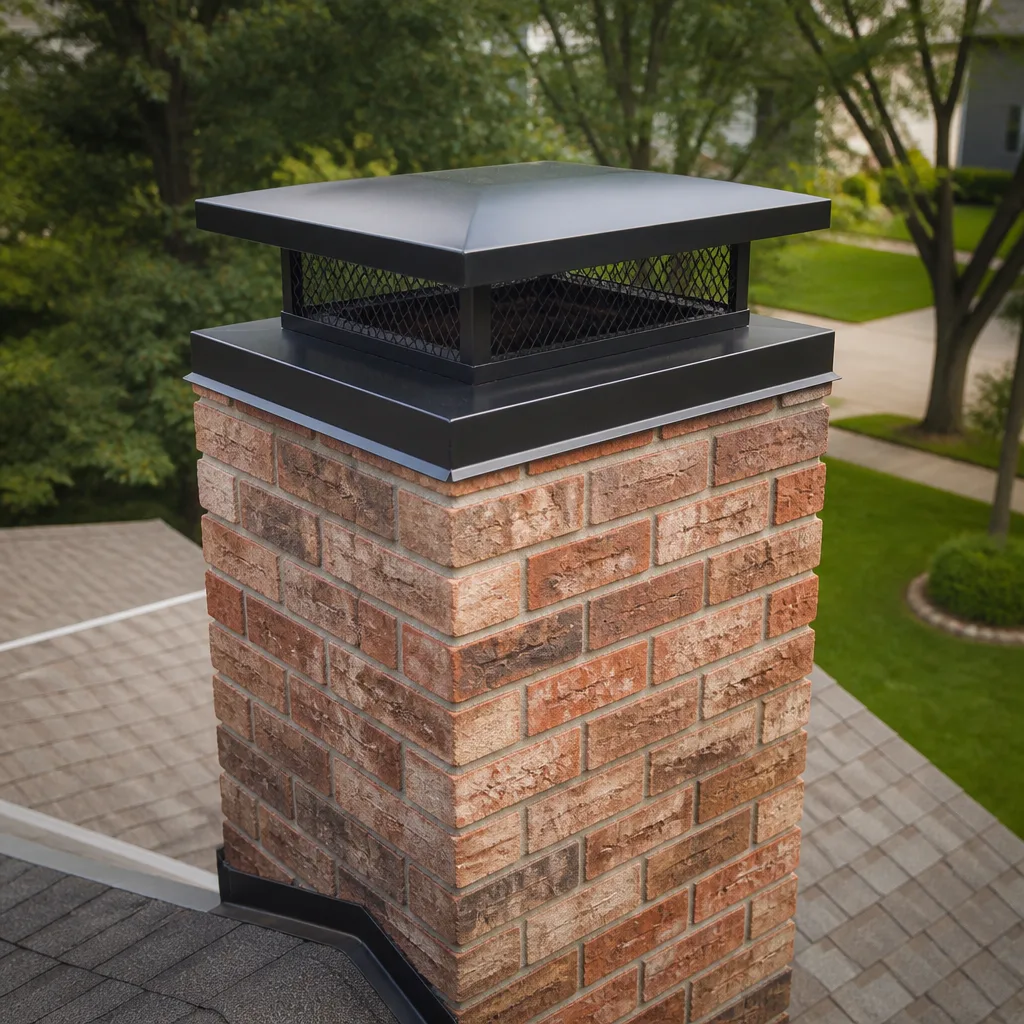 Caps & crowns
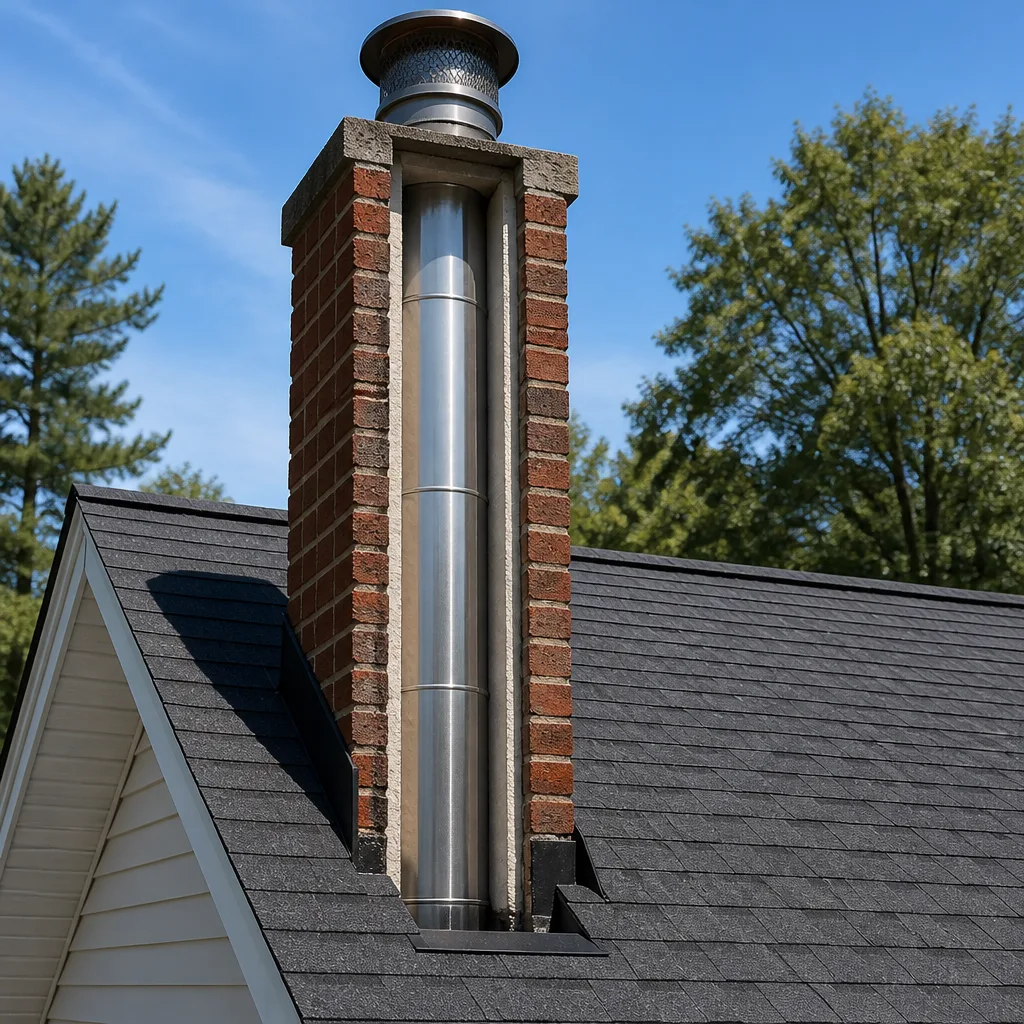 Flue relining
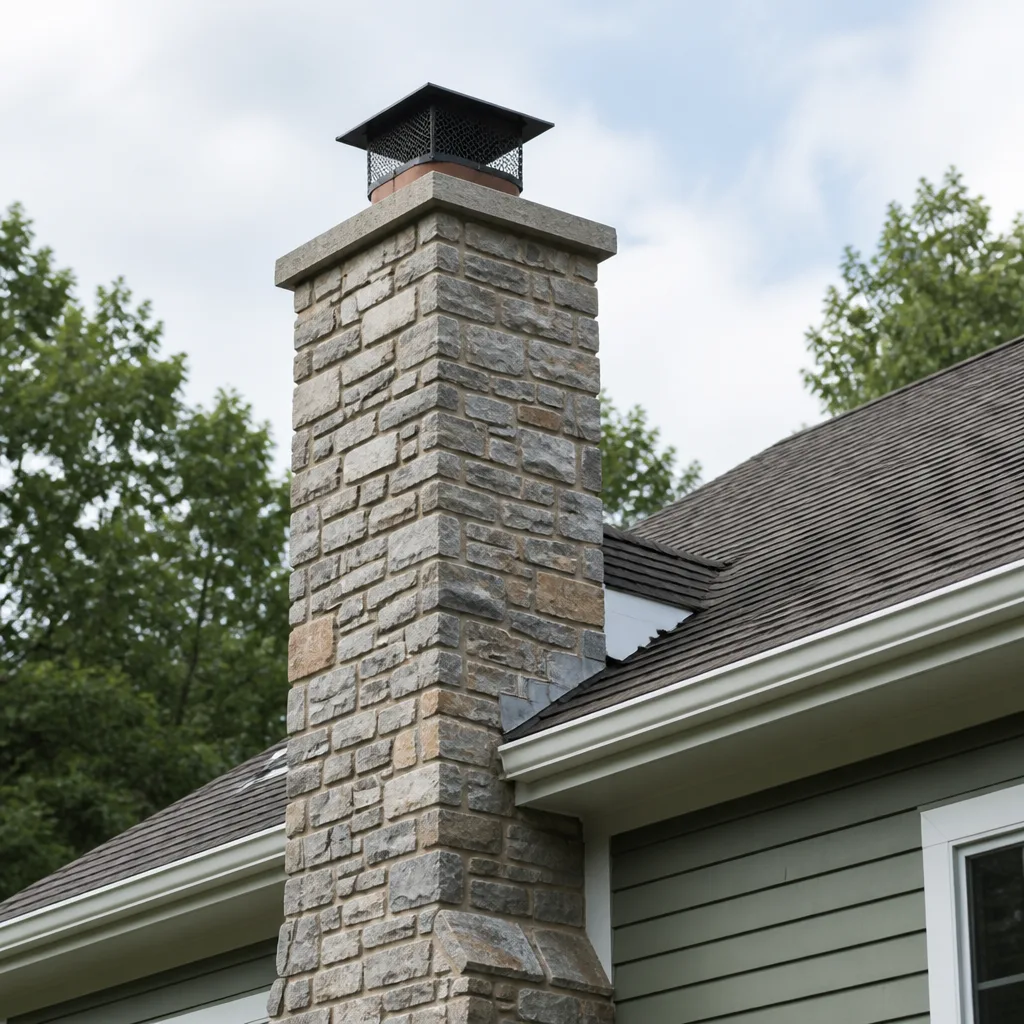 Masonry repair
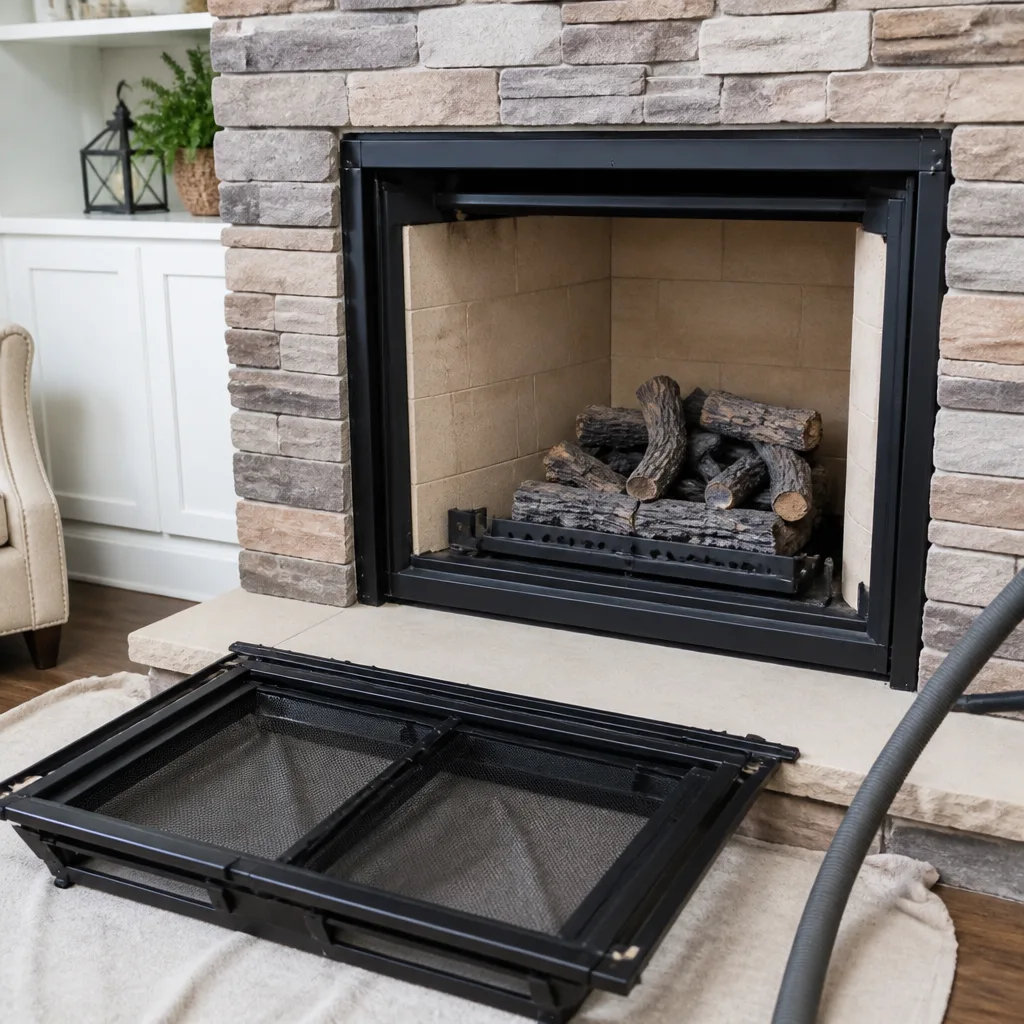 Gas fireplace service
Level 1 sweep and inspection to the NFPA 211 annual standard - flue, crown, cap, and flashing checked and photographed
Chimney sweep logs do not sweep chimneys. They loosen some creosote - which then falls where a brush and vacuum still have to collect it.
Chimney Sweep Maintenance Checklist for West Palm Beach Homeowners
The worst time to discover your chimney cap is missing is the first cool night in November when you light your first fire of the year. But in West Palm Beach, that’s exactly when most homeowners find out a summer storm took it off months ago. Between hurricane season and the occasional cold snap, our chimneys take a beating that most maintenance guides never address because most guides are written for places that get real winters. This guide is different, and you can find more guides & resources on our blog. You’ll learn exactly what to check, when to check it, and whether each item is something you can eyeball from the driveway or something that warrants a call to a professional in West Palm Beach.
Styles & brands we work with
Quick Answer
A chimney maintenance checklist for West Palm Beach homes should follow South Florida’s actual calendar: a post-hurricane-season visual inspection in November, a professional chimney sweep in West Palm Beach before your first fire, a mid-season check in January, and a post-season close-up in March. Most homeowners can handle basic visual checks from ground level, but anything involving creosote buildup, crown cracking, or cap replacement needs a trained eye.
Table of Contents
- Why West Palm Beach Needs Its Own Maintenance Calendar
- The Two Seasons That Actually Matter
- November: Post-Hurricane-Season Inspection
- November: Pre-Use Cleaning and Sweep
- January: Mid-Season Check
- March: Post-Season Close-Up
- Gas-Log Fireplace Maintenance Owners Always Miss
- Documenting Maintenance for Insurance
- Common Mistakes to Avoid
- When to Call a Professional
- Frequently Asked Questions
- The Bottom Line
Why West Palm Beach Needs Its Own Maintenance Calendar
Most chimney maintenance checklists you’ll find online were written for homeowners in Ohio or Pennsylvania. They assume snow, freezing temperatures, and a six-month burning season. West Palm Beach doesn’t work that way. Our chimneys face a different set of stressors: salt air corrosion, hurricane-force wind gusts, driving rain, and humidity that never really lets up. A chimney cap that would last fifteen years in Cincinnati might rust through in eight years here because of the salt content in the coastal air. Crown cracks that would be cosmetic in a dry climate become active leaks in ours because the rainy season delivers water in volumes most regions never see.
That’s why the maintenance calendar for a West Palm Beach chimney has to be built around South Florida’s actual weather patterns, not some generic four-season template. The two periods that matter most are hurricane season, which runs June through November, and fireplace use season, which in our market is really December through February. Those two seasons barely overlap. The practical effect is that storm damage often goes unnoticed until the first cold snap pushes you to light a fire, and by then you’re discovering problems in the dark at the worst possible moment.
The Two Seasons That Actually Matter
In West Palm Beach, chimney maintenance revolves around two distinct windows: hurricane prep season and fireplace use season. Here’s how they break down.
Hurricane Prep Season (June – November)
The goal here is simple: make sure your chimney can survive what a category 1 or 2 storm throws at it, and make sure nothing on your chimney becomes a projectile that damages your roof or your neighbor’s property. The peak months for action are August and September, but the earliest prep should happen in June before the season ramps up. What matters most during this window is the physical integrity of the cap, crown, flashing, and any exterior masonry. A loose cap is not just a water problem. In a hurricane, a loose cap becomes a metal projectile traveling at 90 miles an hour.
Fireplace Use Season (December – February)
This is when West Palm Beach homeowners actually light fires. The season is short, which is precisely why maintenance gets skipped. People think, “We only used the fireplace three times last year, it’s probably fine.” But a short season doesn’t mean a clean flue. It means creosote, the tar-like byproduct of wood combustion, has eleven months to harden and become more difficult to remove. And the chimney that sits unused for most of the year is also the one where birds, rodents, and insects have had ample time to build nests inside the flue. The pre-use cleaning in November or early December is non-negotiable, even if you only plan to burn a handful of fires. For a deeper look at what’s involved, see The Complete Guide to Chimney Cleaning in West Palm Beach.
November: Post-Hurricane-Season Inspection
The first week of November is the single most important maintenance window for a West Palm Beach chimney. Hurricane season officially ends November 30, but the worst storms historically hit our area in September and October. By early November, whatever damage the season delivered is done. Now you need to find it before you light a fire.
Here’s what you can check yourself from ground level without any special equipment.
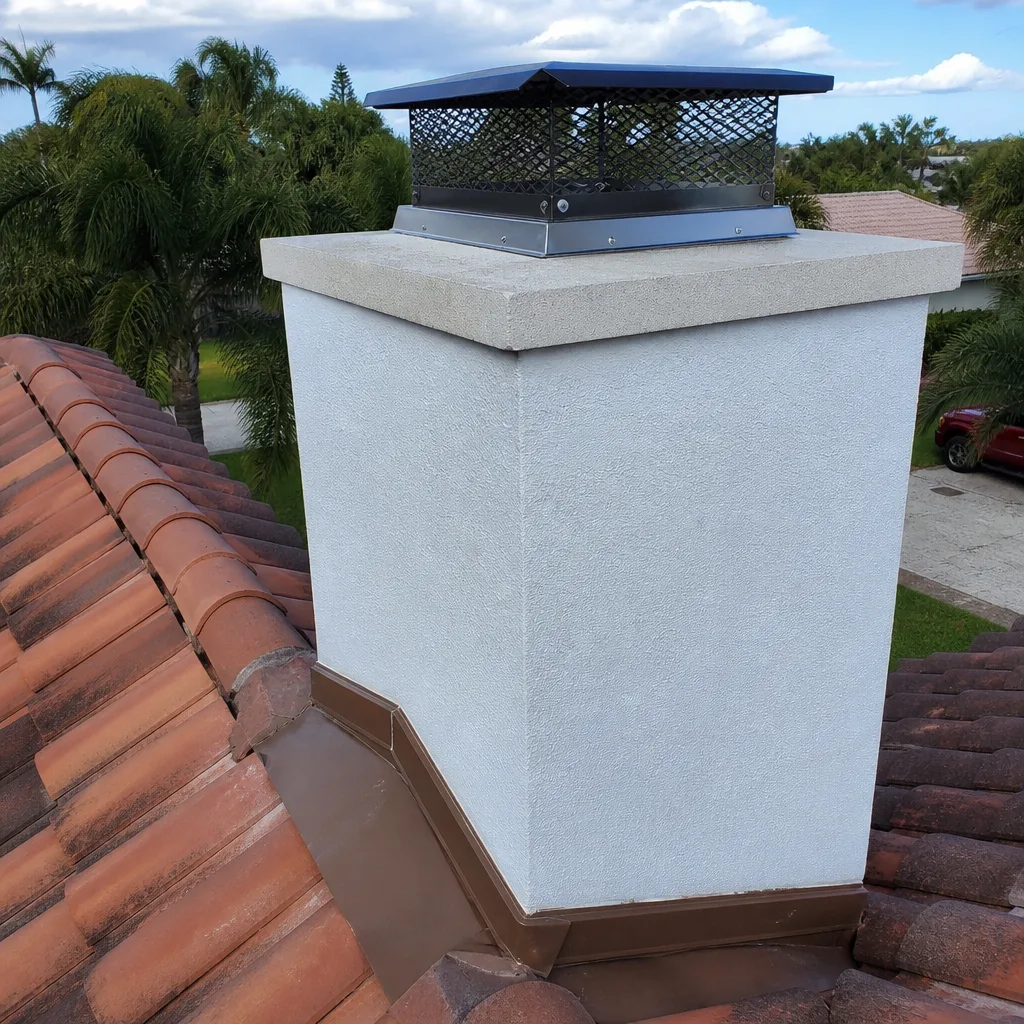
- Look at the cap. Use binoculars or a phone camera with good zoom. Is it still there? Is it sitting level? Is it rusted through anywhere? A missing cap is the most common post-storm chimney issue we see in West Palm Beach, and it’s also the easiest to spot from the ground.
- Check the crown. The crown is the concrete or mortar slab that sits on top of the chimney. From the ground, you’re looking for visible cracking, chunks missing, or a white chalky residue that signals water is getting in and leaching minerals out of the masonry. More than five percent of the crown surface showing cracks is a call-someone situation.
- Scan the flashing. Flashing is the metal sheeting where the chimney meets the roofline. After a hurricane, look for lifted edges, visible gaps, or rust staining running down the sides. If the flashing is loose enough to catch a fingernail from below, water is already getting behind it.
- Check for rust staining. Rust streaks running down the chimney face or pooling at the roofline mean the cap or flashing is corroding. In West Palm Beach’s salt air, rust staining appears years earlier than it would inland. It’s always worth investigating.
- Look at the masonry. Standing in the yard, scan the chimney from top to bottom for missing bricks, crumbling mortar joints, or any lean. A chimney that has shifted even half an inch off vertical is now a structural issue, not a cosmetic one.
Most of these checks take ten minutes with a pair of binoculars. But if you see anything questionable, do not climb up there yourself. Steep-pitch South Florida roofs, especially tile roofs, are genuinely dangerous for people without training and fall protection. This is the point where you call a professional for a chimney inspection in West Palm Beach instead of trying to verify from a ladder.
November: Pre-Use Cleaning and Sweep
Once you’ve confirmed the exterior survived hurricane season, the next step is getting the inside of the flue ready for fire season. This is the professional chimney sweep in West Palm Beach appointment that should happen every year before your first fire, even if the chimney saw light use the previous season.
A standard chimney sweep in West Palm Beach typically runs $180 to $340 for a single flue before any repairs are identified. If you have a second flue, which is common in homes with both a fireplace and a furnace venting through the same chimney, expect to pay $120 to $200 for the additional flue. These ranges assume a straightforward sweep with no major issues discovered. If the previous homeowners never had the chimney cleaned, and the creosote has hardened into a glaze-like layer, removal takes longer and costs more, usually an additional $80 to $150 depending on severity.
Here’s what happens during a proper sweep and why each step matters.
- Flue inspection before cleaning. The technician checks for obstructions, animal nests, and the existing creosote level before touching anything. This identifies problems that affect how the cleaning should be done.
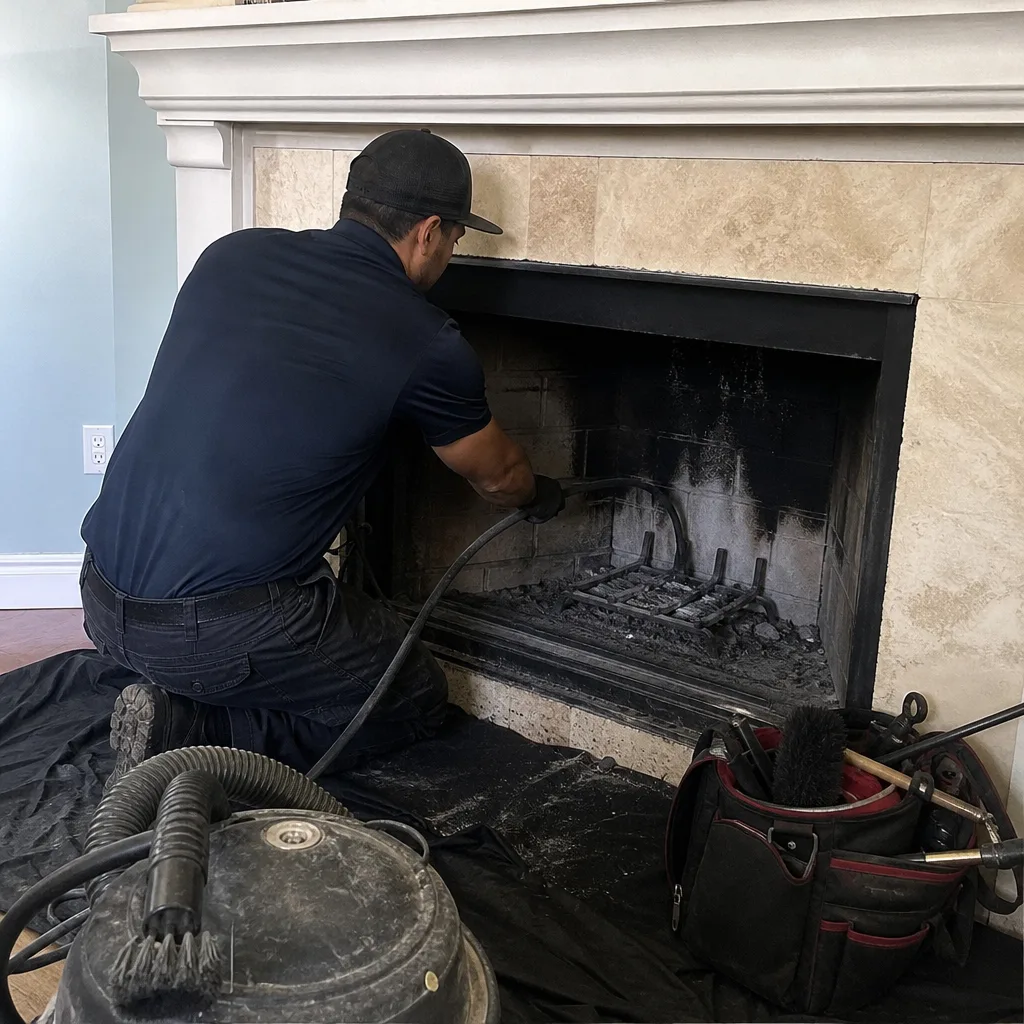
- Drop cloths and dust containment. A professional sweep seals the fireplace opening and runs a high-powered vacuum during the entire process. If a company shows up without a vacuum and tells you “there will be some dust,” that’s a red flag.
- Mechanical brushing of the full flue length. Wire or poly brushes sized to your specific flue diameter scrub the interior walls from top to bottom. This removes creosote and any minor buildup.
- Post-sweep inspection with photos. After the flue is clean, the technician examines the interior again, now that creosote isn’t hiding anything, and checks for cracks in the liner, damaged masonry, or corrosion. At Alcott Chimney West Palm Beach, every sweep includes a camera inspection, and you see the photos before any repair is recommended.
Rubio Castellano’s team at Alcott has serviced chimneys in West Palm Beach since 2002, and the most common November surprise we find is not creosote. It’s animal debris. South Florida has a long warm season, and our chimneys are attractive nesting spots for birds and squirrels precisely because they sit unused for so many months each year. A cap with even a small gap becomes an open door. The pre-use sweep clears whatever moved in.
January: Mid-Season Check
You’re now using the fireplace. A January check is quick, but it catches problems while they are still small. Cold fronts in West Palm Beach tend to arrive in waves, often several in January, and this is when the fireplace starts getting actual use. Here’s what to look for.
Smoke entering the room instead of going up the flue. This signals a draft problem, which could mean a partially blocked flue, an improperly sized damper, or an issue with the chimney height relative to the roofline. If you notice smoke backing up even with the damper fully open, stop using the fireplace and call for a professional assessment. Carbon monoxide exposure is the real risk here, not just smoke odor.
Unusual sounds. Scratching, chirping, or fluttering coming from the chimney during a burn is an animal that found its way in after the November sweep. It happens. Stop burning immediately and get it addressed before you have a trapped animal and an obstructed flue.
The smell test. A properly functioning chimney draws smoke up and out. If you smell smoke in the house hours after the fire is out, something is off with the draft or the damper seal. A lingering smoky smell in a room you’re not using, or a musty odor near the fireplace when it hasn’t been used in days, can also mean water is pooling somewhere it shouldn’t.
Visible creosote buildup. If you shine a flashlight up into the flue from inside the firebox and see shiny black accumulation thicker than about an eighth of an inch, the flue needs cleaning before you burn again. A single unsafe burn with heavy buildup is all it takes for a chimney fire.
March: Post-Season Close-Up
By March, fire season in West Palm Beach is effectively over. The cold fronts stop arriving. Your fireplace will sit dormant for eight or nine months, which means the conditions inside the flue matter more than they do during active use. A chimney that sits unused retains whatever moisture, debris, and creosote were there after the last fire. The March close-up sets you up for a problem-free November.
- Close the damper fully. An open damper during the humid season lets moist air circulate through the flue and into the chimney interior. That humidity accelerates rust on metal components and can cause creosote to absorb moisture and become more corrosive.
- Clean out the firebox. Remove the ashes completely. Ash left in place all summer absorbs humidity from the air, and damp ash creates an environment that accelerates deterioration of the firebrick and any metal components in the firebox.
- Note anything odd from the burning season. Did you notice smoke backing up once in mid-January? A strange smell during the last burn? Write it down while it’s fresh. By the time November arrives, the memory will be gone. We keep maintenance records, but homeowners rarely do.
- Do one final visual check of the exterior. Look for anything that changed over the winter. Our winter is mild, but it’s not without storms. A quick visual pass in March gives you a baseline before hurricane season begins in earnest in June.
Gas-Log Fireplace Maintenance Owners Always Miss
West Palm Beach has a high percentage of homes with gas-log fireplaces, either original installations or conversions from wood-burning. Gas logs are convenient because there’s no creosote and no ash, which leads many owners to believe they need no maintenance at all. That belief is wrong, and here are the three maintenance tasks gas-log owners routinely skip.
1. Annual burner and log-set cleaning
Gas logs do not produce creosote, but they do produce soot that can accumulate on the logs themselves and clog the burner ports. The burner is the metal tube or pan that distributes gas to create the flame pattern. When its ports get clogged, the flame burns unevenly, which can cause carbon monoxide production to increase. Every gas-log fireplace should have the burner inspected and cleaned once a year, ideally before the first use of the season. This is a gas fireplace repair in West Palm Beach service we perform regularly, and it’s inexpensive compared to what a clogged burner can do to the log set over time.
2. Checking the thermocouple and pilot assembly
The thermocouple is the safety device that shuts off gas flow if the pilot light goes out. In West Palm Beach, the humidity and occasional salt air exposure can corrode this component faster than manufacturers expect. A failing thermocouple presents as a pilot light that won’t stay lit, or a fireplace that goes out mid-use. Testing the thermocouple takes a trained technician about ten minutes with a multimeter, which is far less expensive than replacing a gas valve that got damaged by a malfunctioning thermocouple.
3. Verifying the venting after storms
Gas-log fireplaces vent through the same chimney system as wood-burning ones, which means the cap, flashing, and crown all need the same post-hurricane attention a wood chimney gets. What owners miss is that a partially blocked flue is even more dangerous with gas logs than with wood because carbon monoxide production is continuous and invisible. If your gas fireplace has a venting system that was affected by a storm, do not run it until it’s been inspected. This is a safety issue, not a convenience one.
Documenting Maintenance for Insurance
Florida homeowners insurance carriers have tightened their standards on chimney-related claims in recent years. After a chimney fire or a water damage claim, the insurance adjuster is going to ask one question first: Can you show that the chimney was maintained?
Here’s what to keep.
- Receipts from every professional sweep and inspection. Every service invoice should note the date, the type of service, and the company name. Keep these indefinitely, or at minimum for the ownership period of the home.
- Written records of any repairs. If a liner was replaced or a crown was resurfaced, keep the documentation showing what was done and what materials were used. Insurers want to know whether a previous owner deferred maintenance in ways that contributed to a claim.
- Photos from before and after repairs. Camera footage from a professional inspection is strong documentation. If Alcott Chimney West Palm Beach performs your sweep, we provide photo evidence of the flue condition both before and after cleaning. That photo file is exactly what an adjuster wants to see.
- Your own visual check log. A simple notebook entry, “November 2, viewed cap from ground with binoculars, no visible damage,” establishes that you were paying attention even between professional visits.
In our experience working with West Palm Beach homeowners through the insurance process, claims move faster when maintenance records are complete and professional. The homes that struggle are the ones with no paper trail and a chimney that hasn’t been swept in years. The documentation habit costs almost nothing and can mean the difference between a covered claim and one that gets reduced or denied.
Common Mistakes to Avoid
- Skipping the sweep because “we barely used it.” West Palm Beach homeowners use their fireplaces less than homeowners up north, which creates a false sense that maintenance is optional. An unused chimney still gets animal nests, storm damage, and moisture intrusion. The sweep is about safety, not about how many fires you burned.
- Waiting until the first cold snap to think about the chimney. By the time you’re cold and want a fire, the inspection and sweep should already be done. Every year we get calls in early December from West Palm Beach homeowners who realized that night they hadn’t looked at the chimney since March. It works out, but the scheduling is tighter and sometimes they have to wait a week for an opening.
- Climbing onto the roof to inspect the cap yourself. South Florida tile roofs are steep and fragile. Tiles crack under foot traffic. Falls from single-story homes cause serious injuries every year. The ground-level visual check with binoculars gives you most of the information you need, and anything that requires a closer look is a job for a professional with the right safety equipment.
- Ignoring rust staining because “it’s just cosmetic.” In West Palm Beach’s salt air, rust staining is an early warning that a metal component, usually the cap or flashing, is failing. What’s cosmetic this year is a water intrusion problem next year.
- Burning driftwood or construction lumber. Wood gathered from the beach contains salt that releases corrosive compounds when burned, and construction lumber is often pressure-treated with chemicals that should not be burned indoors. Use seasoned hardwood from a proper firewood supplier.
- Leaving the damper open all summer thinking it “airs out” the chimney. A damper left open during the humid season does the opposite: it lets moisture into the flue interior, accelerating rust and creosote breakdown. Close the damper when the fireplace is not in use.
- Hiring a chimney sweep on price alone without verifying who’s coming. This is what Ruben Castellano built Alcott Chimney West Palm Beach to address. When a crew shows up at your door, you should already know exactly who they are. If a chimney company can’t tell you the name of the technician before the visit, that’s a reason to keep looking.
When to Call a Professional
Any sign of structural damage, a missing or compromised cap, visible crown cracking, or water staining around the fireplace is a call to a professional in West Palm Beach. The same goes for smoke backing up into the room, a persistent smoky odor after the fire is out, or any suspicion that an animal is in the flue. Do not attempt flue cleaning yourself with consumer-grade brushes. The risk of damaging the liner or leaving creosote behind is too high, and a chimney fire is not worth the money saved. A professional sweep with a camera inspection costs a fraction of what a chimney fire or water damage repair costs. Alcott Chimney West Palm Beach offers free estimates in West Palm Beach, call (728) 203-8687 to schedule a sweep or inspection.
Frequently Asked Questions
A standard chimney sweep in West Palm Beach typically costs between $180 and $340 for a single flue, before any repairs are identified. If your home has a second flue, expect to pay an additional $120 to $200. Homes where creosote has built up over multiple years of skipped maintenance often require extra labor, adding roughly $80 to $150. Every sweep with Alcott includes a camera inspection and written pricing before any work begins. To schedule our Chimney Sweep services, call (728) 203-8687 for a free estimate. Call (728) 203-8687 for an exact quote, estimates are free.
At minimum, once per year, and the best timing for West Palm Beach is November or early December, before your first fire of the season. Even if you burned only a handful of fires the previous winter, the annual sweep also serves as your post-hurricane-season inspection, catching storm damage that would otherwise go undetected. Homes that burn heavily during cold snaps might need a second sweep mid-season.
Maybe, maybe not. The only way to know is with a camera inspection of the flue interior. Some West Palm Beach homes with original clay tile liners from the 1970s and 1980s have cracks that need attention, but we also see plenty of liners that are perfectly sound. The thing Alcott does differently is show you the camera footage. If we recommend a liner, you’ll see the damage with your own eyes before deciding. Nothing is recommended on faith.
The risks are a chimney fire, carbon monoxide exposure, and water damage to the chimney structure and surrounding roofline. A chimney fire happens when creosote buildup ignites inside the flue, which can crack the liner and spread to the house structure. Carbon monoxide risk increases with any obstruction or venting problem, and water intrusion through a cracked crown or missing cap causes progressive structural deterioration. None of these are rare in West Palm Beach; all of them are preventable with a yearly sweep and inspection. Call (728) 203-8687 to get on the calendar before burning season.
Yes, and you should, twice a year. Use binoculars or a phone camera with zoom to examine the cap, crown, flashing, and visible masonry from the ground. You’re looking for anything missing, cracked, rusted, or leaning. But a ground-level visual check is not a substitute for a professional inspection. You cannot see the interior of the flue, and the flue interior is where the most dangerous problems live.
Yes. Every Alcott Chimney West Palm Beach technician passes a background check and identity verification before ever stepping onto a customer’s property. This is the Threshold Standard, not an optional service tier. When you book, you receive the technician’s name and photo before the appointment, and that person will show you a photo ID badge at the door. This is standard for us, not an exception.
Every repair Alcott Chimney West Palm Beach performs comes with a written guarantee. If the repair fails within the coverage period, which is a full year on completed jobs, the second visit is free. The guarantee is written, specific, and included at no extra charge on every repair. We do not do verbal handshake guarantees.
The Bottom Line
A chimney maintenance checklist for West Palm Beach works when it respects our climate. Check the exterior after hurricane season ends, sweep the flue before your first fire, do a mid-season check in January, and close the chimney up properly in March. Most of the checklist is stuff you can do from the ground with binoculars and a flashlight. The rest is a once-a-year professional visit that costs less than a single insurance deductible. West Palm Beach homeowners who follow this calendar catch problems before they become emergencies. If you’re not sure where to start, call (728) 203-8687 and get a free estimate from the team at Alcott Chimney West Palm Beach home.
Written by Ruben Castellano, Owner at Alcott Chimney West Palm Beach, serving West Palm Beach since 2002.
See the difference
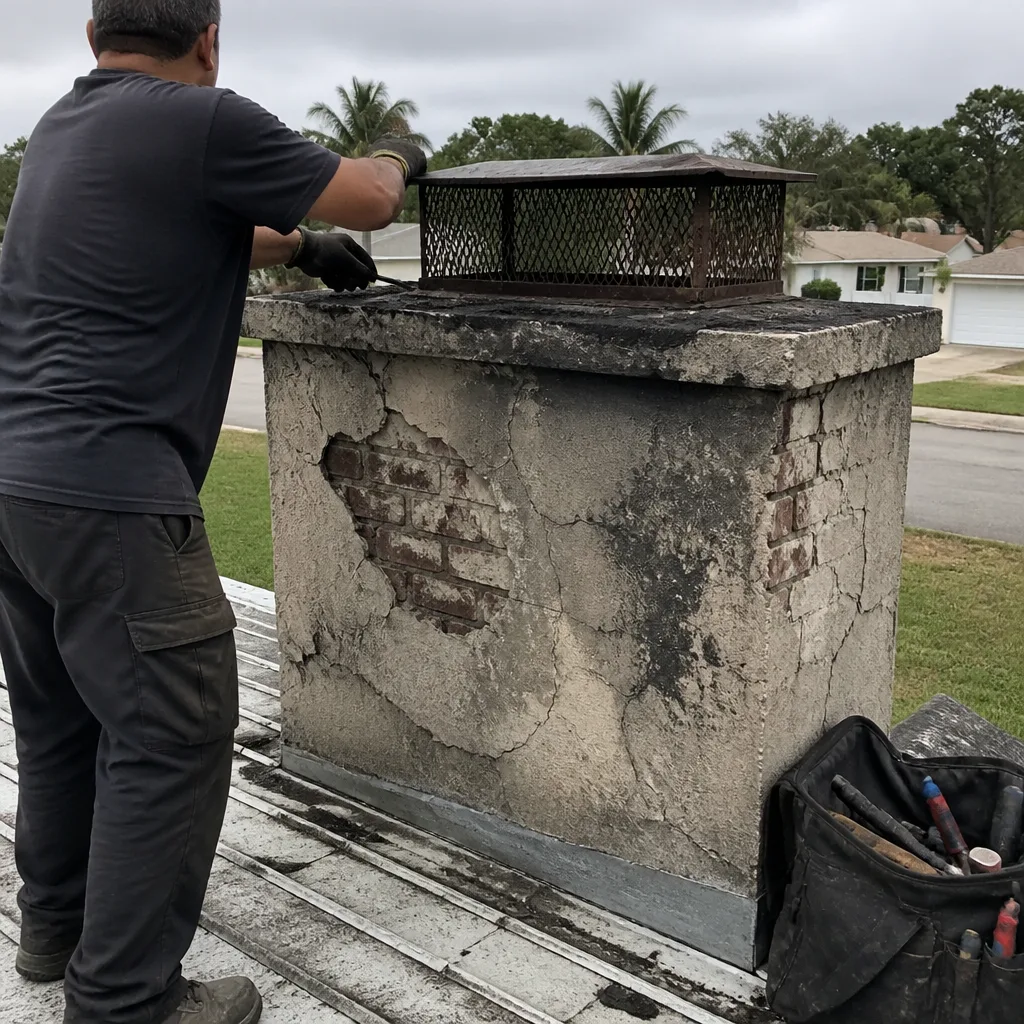 Before
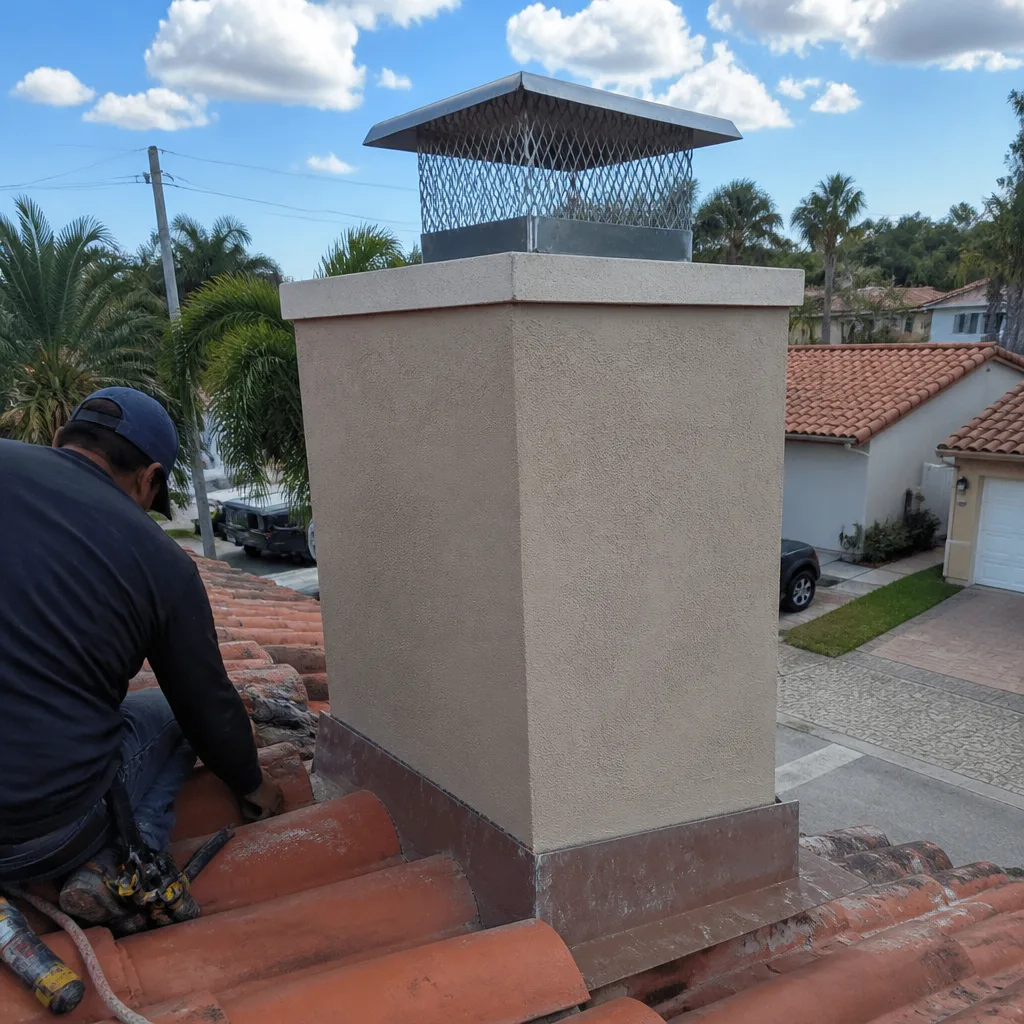 After
After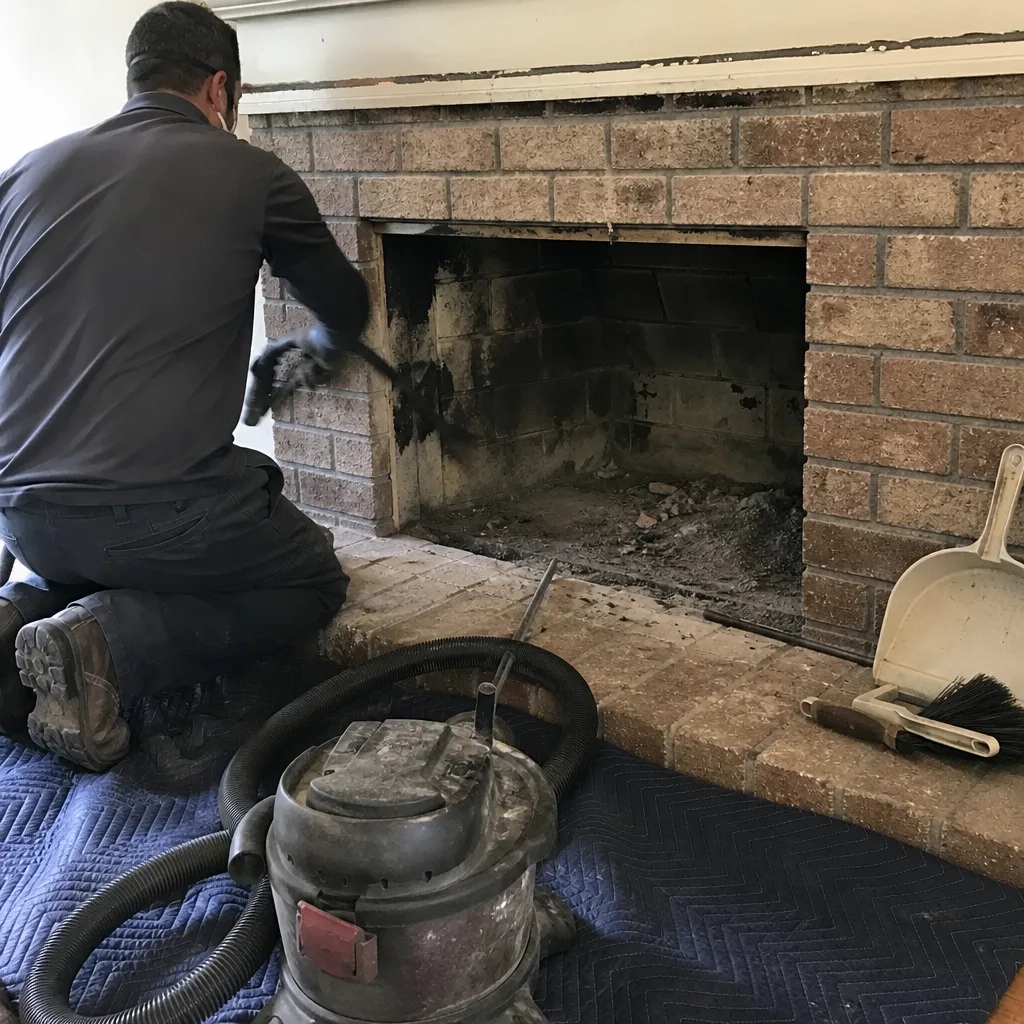 Before
 After
After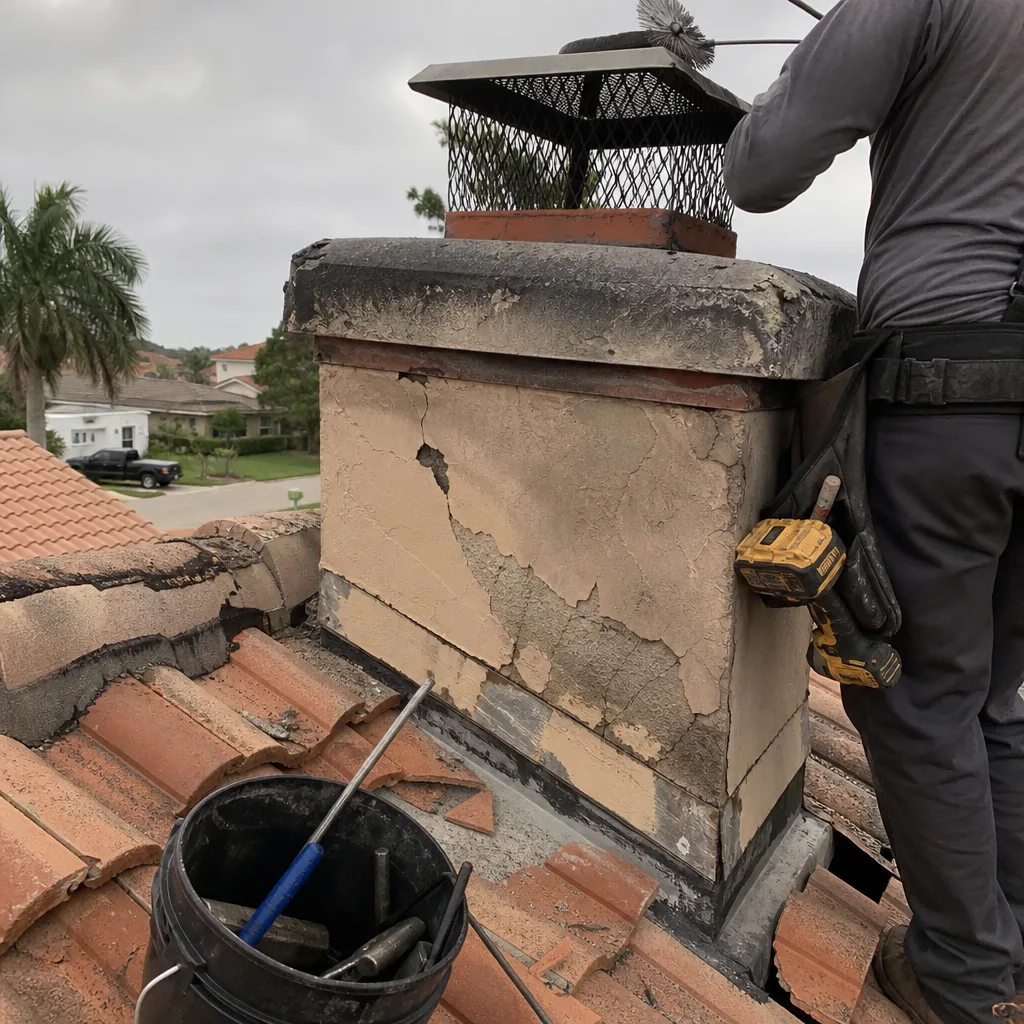 Before
 After
After