
Last updated October 15, 2026
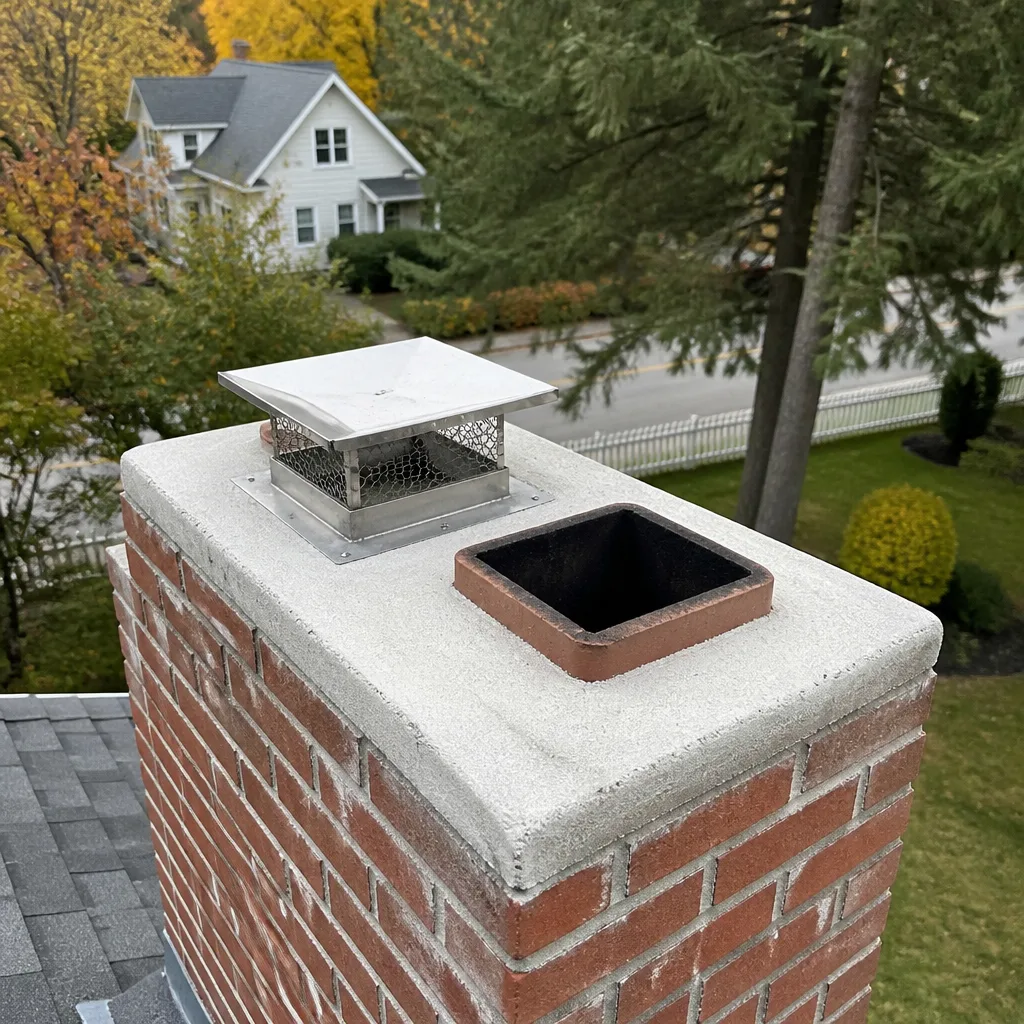 Sweep & inspection
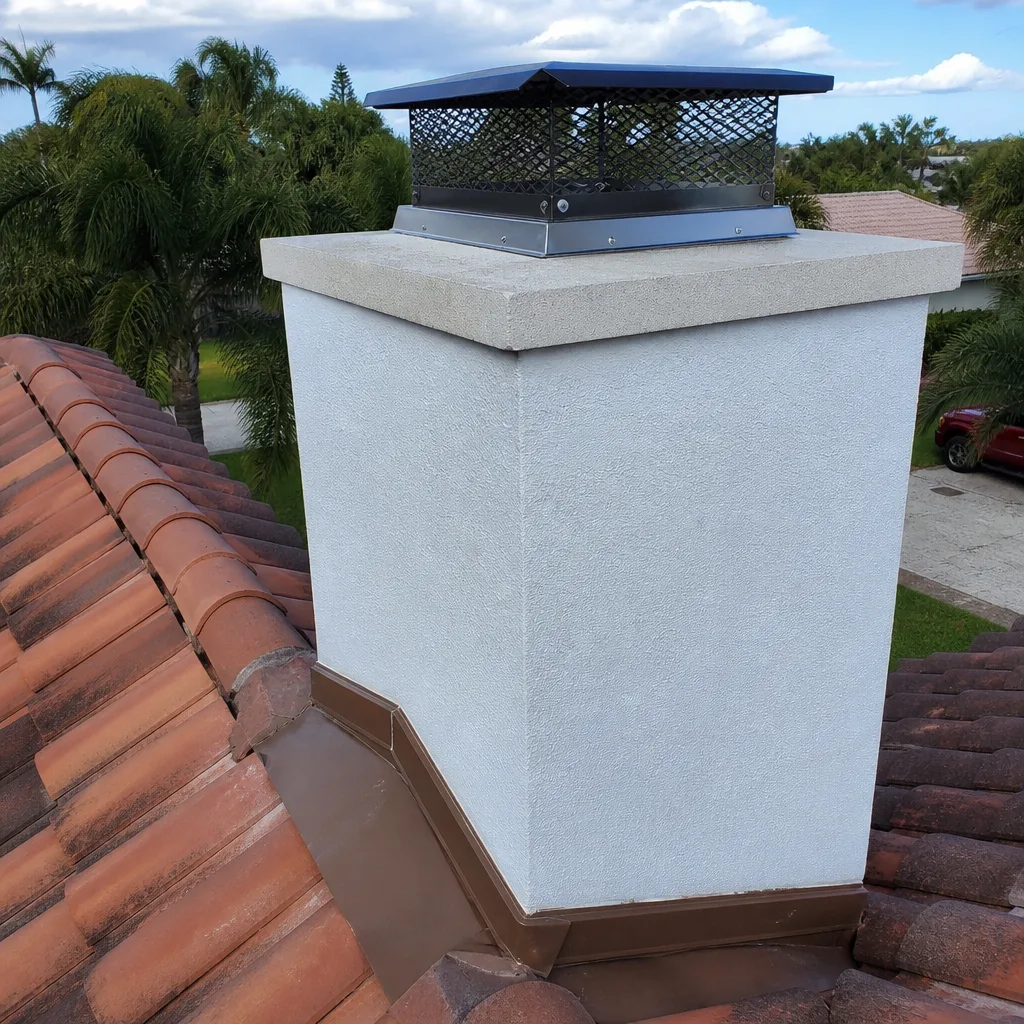
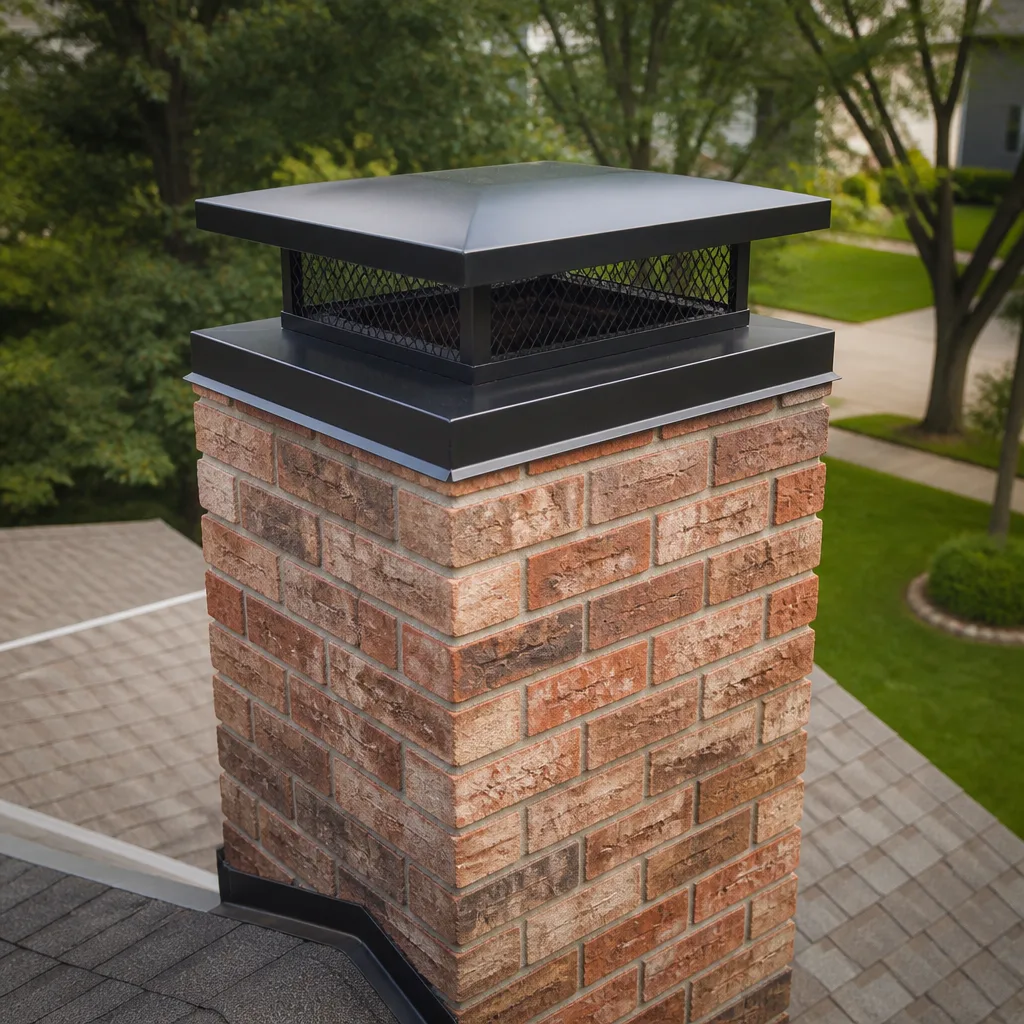 Caps & crowns
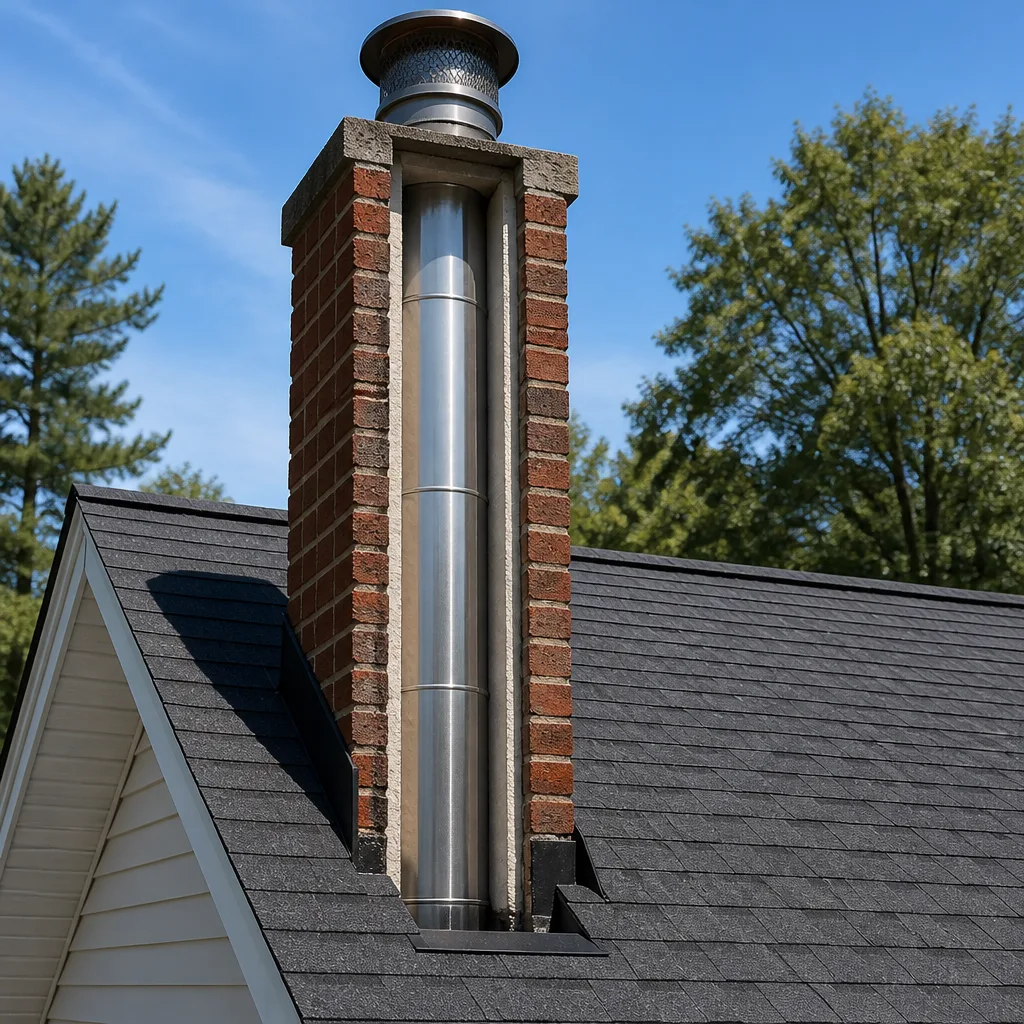 Flue relining
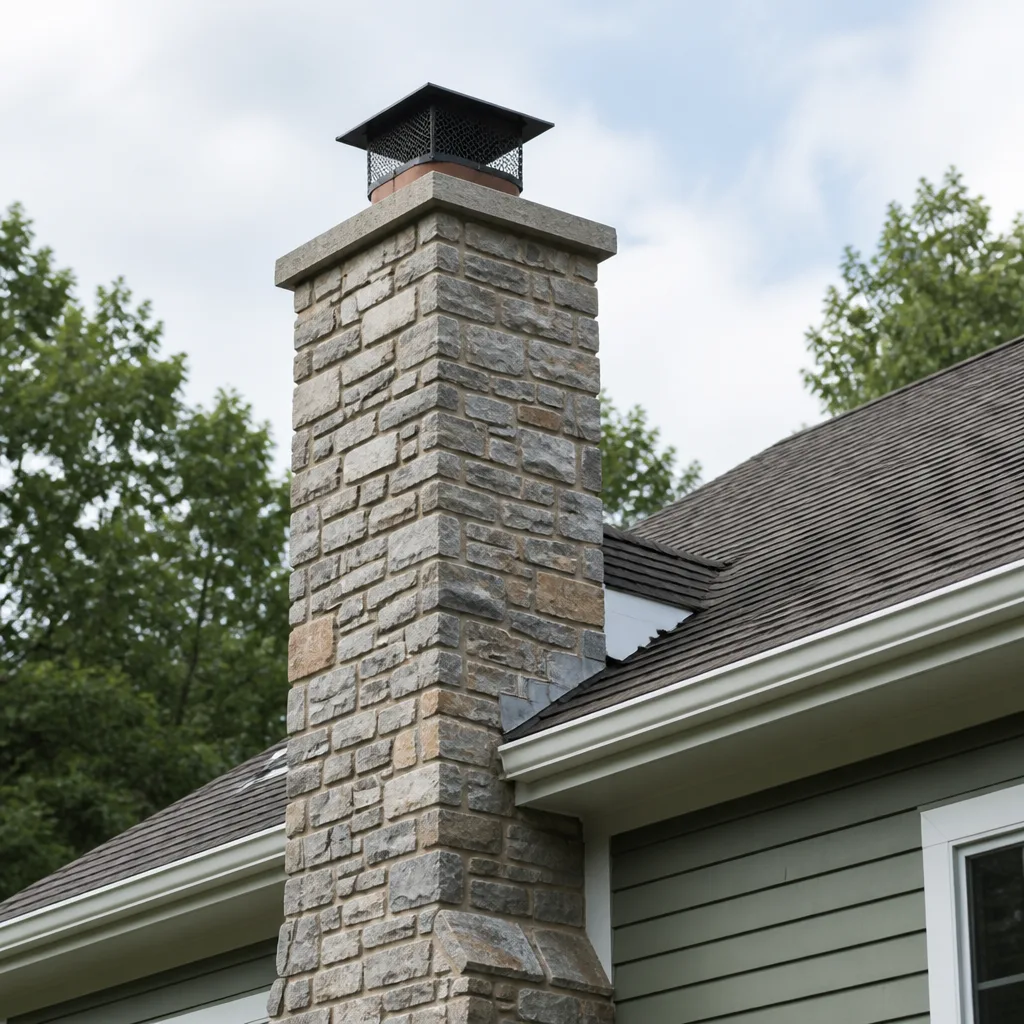 Masonry repair
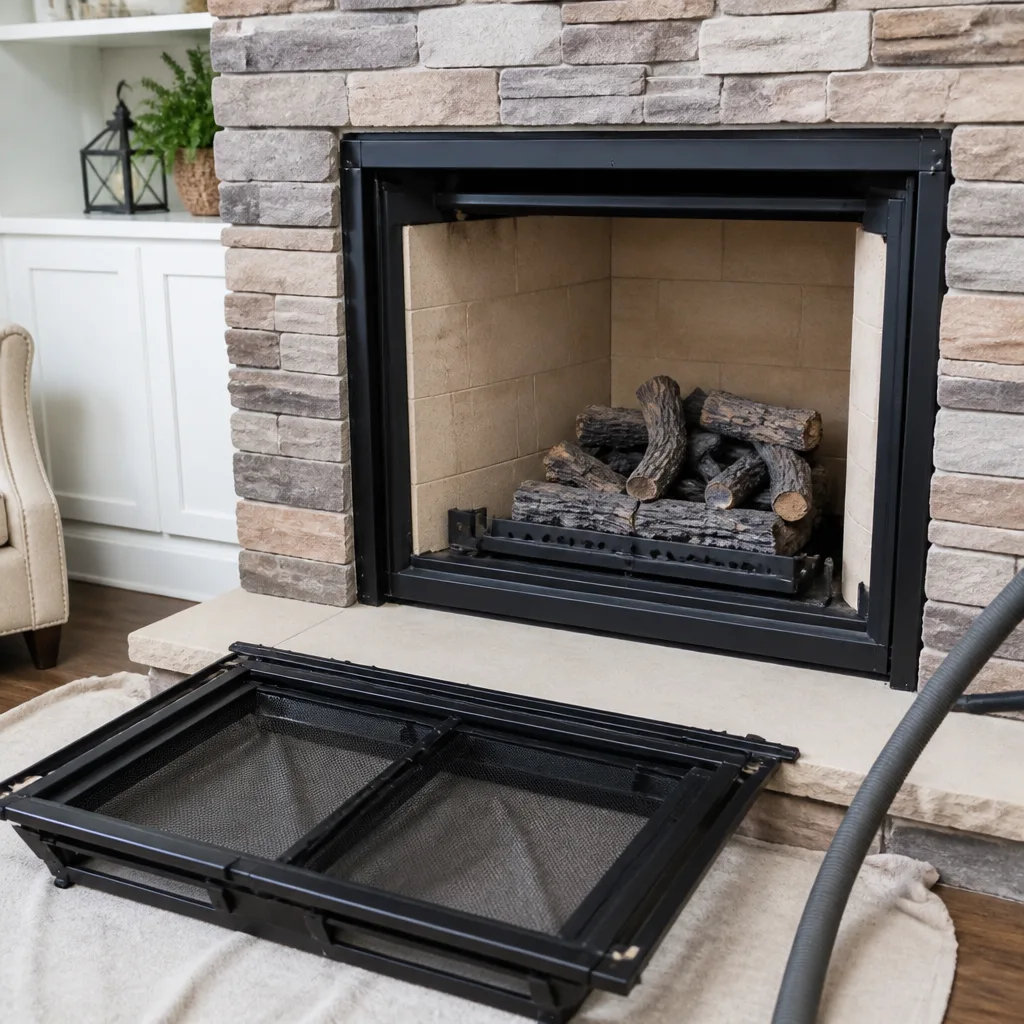 Gas fireplace service
Level 1 sweep and inspection to the NFPA 211 annual standard - flue, crown, cap, and flashing checked and photographed
Chimney sweep logs do not sweep chimneys. They loosen some creosote - which then falls where a brush and vacuum still have to collect it.
The Complete Guide to Chimney Cleaning in West Palm Beach
Most West Palm Beach homeowners use their fireplace fewer than 15 nights a year, yet that low-use pattern creates a creosote buildup profile just as dangerous as a fireplace used nightly in a cold climate. Wood burns cooler and less completely in short, occasional fires, leaving behind a dense, unburned residue that hardens into a fire hazard faster than you’d expect. This guide explains why West Palm Beach chimneys fail differently than northern ones, what a proper cleaning actually involves, what it should cost, and how to read the report you get afterward. For seasonal chimney cleaning care in West Palm Beach, see our year-round homeowner’s guide. By the end, you’ll know exactly what to expect before any technician steps through your door.
Quick Answer
Chimney cleaning in West Palm Beach typically costs between $189 and $329 for a standard sweep, takes 60 to 90 minutes on site, and should be done every 50 to 70 fires or at least once every two years. The cleaning removes creosote (the tar-like buildup that causes chimney fires) and debris, but a full inspection is what catches the salt-air corrosion and storm damage specific to South Florida. If you haven’t had your chimney looked at in more than two years, book a sweep and inspection together.
Styles & brands we work with
Table of Contents
- Why West Palm Beach Chimneys Fail Differently
- Creosote Stages Explained (And Why Low Use Makes Things Worse)
- What Happens During a Professional Cleaning
- Level 1 vs Level 2 Inspections: Reading Your Report
- How Much Does Chimney Cleaning Cost in West Palm Beach?
- How Often Should You Sweep a Chimney in South Florida?
- The 365-Day Guarantee vs Standard Warranties
- Common Mistakes to Avoid
- When to Call a Professional
- Frequently Asked Questions
Why West Palm Beach Chimneys Fail Differently
Talk to a chimney sweep in Vermont and they’ll tell you their biggest problems are creosote fires and freeze-thaw brick spalling. Talk to one in West Palm Beach and the list sounds completely different: salt corrosion on metal components, mortar erosion from humid air, rusted dampers, and storm debris packed into flues. The difference matters because a generic chimney cleaning checklist misses the things that actually damage chimneys here.
Salt air is the most overlooked factor. Homes within a mile of the Intracoastal Waterway get constant exposure to airborne salt, which accelerates corrosion on steel chimney caps, stainless steel liners, and damper assemblies. In our experience, a chimney cap that would last 15 years in Orlando might need replacement in 10 years near the water in neighborhoods like El Cid, Prospect Park, or the South End. A proper chimney inspection in West Palm Beach should specifically include checking metal components for rust pitting and pinhole corrosion, not just looking for soot.
Hurricane season adds another layer. After any major storm, debris gets into chimneys in ways northern technicians never deal with: palm fronds, shingle pieces, roofing nails, and sometimes entire bird nests dislodged by high winds. We regularly find debris packed into flues after summer storms, and the only way to spot it is a camera inspection or physically looking down from the top. If water is dripping into your firebox during heavy rain, blocked flue debris is the second most common cause after a failed chimney cap.
The third West Palm Beach-specific factor is humidity-driven deterioration. Masonry chimneys in South Florida absorb moisture from the air year-round, not just during freeze cycles. That constant dampness eats away at the mortar joints between bricks, especially on chimneys built before 1980 that used older mortar mixes. You won’t see it from the ground, but a technician who knows what to look for will spot soft, crumbling mortar joints during a routine sweep and tell you whether it needs repointing now or can wait.
For a full breakdown of what our inspections cover, see our Chimney Inspection in West Palm Beach page.
Key takeaways on West Palm Beach-specific threats:
- Salt air corrodes metal chimney components faster than inland locations
- Hurricane debris blocks flues and the blockage is invisible from ground level
- Constant humidity softens mortar joints year-round
- Homes within a mile of the Intracoastal need more frequent metal component checks
Creosote Stages Explained (And Why Low Use Makes Things Worse)
Creosote is the tar-like residue left behind when wood smoke cools in a chimney. Every fire produces some. The question is how much remains, and how much of it hardens into a form that’s difficult to remove and dangerous to ignore. Creosote falls into three recognized stages, and South Florida’s occasional-use pattern tends to produce the more dangerous Stage 2 buildup faster than you’d get with regular nightly burning.
Stage 1 creosote is the flaky, dusty soot that brushes off easily. If that’s all you have, a standard sweep removes it in one pass. It’s what most people picture when they think of a dirty chimney.
Stage 2 creosote looks like shiny black flakes or puffy, charred coating. It’s thicker, harder, and requires specialized rotary cleaning tools to remove properly. This is where most West Palm Beach chimneys end up, and here’s why: when you burn wood only occasionally in a warm climate, your fires are shorter and cooler. The wood never reaches the high temperatures that would burn off volatiles efficiently, so a higher percentage of each log becomes unburned creosote that sticks to the flue walls. A fireplace used 10 nights a year for two years can have Stage 2 buildup equivalent to a northern fireplace used 100 nights.
Stage 3 creosote is the dangerous one. It looks like a thick, hardened glaze or tar running down the flue, and it can melt and re-ignite even after a cleaning attempt if the wrong tools are used. Stage 3 creosote often requires chemical treatment, mechanical removal, or in severe cases, a new liner. We sometimes use HeatShield or Gelco resurfacing products when glaze creosote has damaged the flue beyond what sweeping alone can fix.
The message for West Palm Beach homeowners: don’t assume low usage means low risk. If it’s been more than two years since your last sweep and you’ve burned 20 or 30 fires in that time, there’s a real chance you have Stage 2 creosote. And that’s manageable if you act before it progresses.
Detailed guidance on how to keep your system clean between professional visits is on our Chimney Sweep in West Palm Beach page.
What Happens During a Professional Cleaning
If you’ve never had a chimney cleaned before, the process might seem unpredictable. It isn’t. A professional sweep in West Palm Beach follows the same sequence every time, and knowing that sequence before the technician arrives means nothing comes as a surprise. Here’s exactly what a standard appointment looks like, phase by phase.
Phase 1: Setup and Protection (10 to 15 minutes)
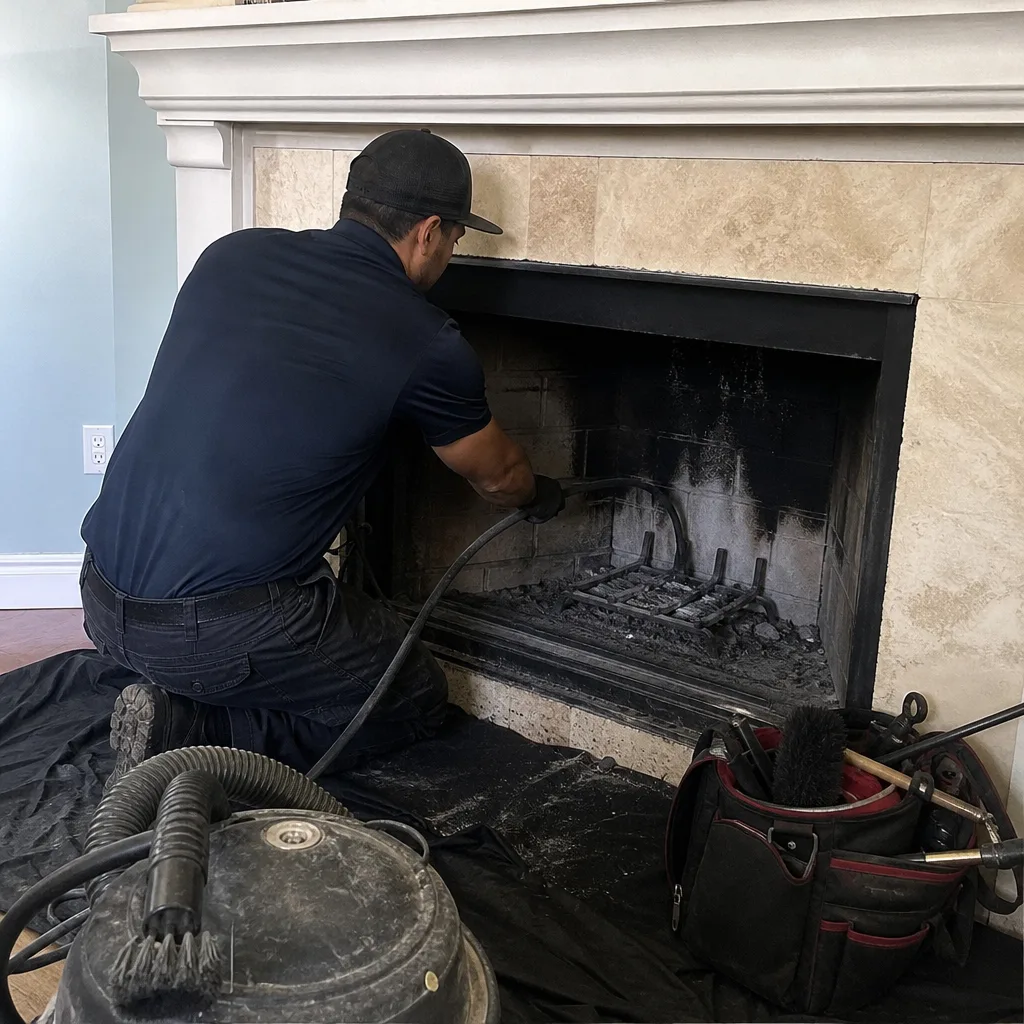
Before any work starts, the technician should lay drop cloths around the fireplace and run a vacuum system with a HEPA filter to capture dust. If your technician doesn’t protect your flooring, that’s a red flag. In West Palm Beach homes, we’re often working on wood floors, travertine, or tile, and a proper setup means zero soot touching any of it.
The technician will also verify the damper is open and confirm the firebox is cold. This is routine, but it matters.
Phase 2: The Actual Sweep (30 to 45 minutes)
The core of the work is mechanical brushing. Technicians use a system of rods and bristle brushes sized to your flue, working from the firebox up or from the roof down depending on the chimney design. For Stage 2 creosote, the brush is often attached to a power drill, spinning as it moves through the flue to knock off hardened deposits.
After brushing, the technician manually removes the loosened creosote and soot from the smoke shelf, damper, and firebox. This is the part many homeowners never see, but it’s essential. A flue that’s brushed but not cleared at the bottom still has all that loose material sitting there waiting to ignite.
Phase 3: Inspection and Documentation (15 to 20 minutes)
Once the flue is clean, the technician should do a Level 1 inspection (more on that below), checking the firebox, damper, visible flue lining, and the exterior chimney cap and crown where accessible. If you’re getting a Level 2 camera inspection, this is when the camera goes in. The technician should show you the footage or at minimum report what the camera found. We use camera inspection as a standard part of our process because it shows homeowners the difference between “cleaned and fine” and “cleaned, but you have a crack that will become a problem.”
Phase 4: Cleanup and Report (10 minutes)
Protective coverings come up, the vacuum gets a final pass, and you should get a written report of what was done, what was found, and what (if anything) needs follow-up. You should never leave a sweep appointment without knowing what your technician saw. Alcott Chimney Sweep does more than hand you a receipt. You get a written report that tells you exactly what condition your flue is in, in plain English.
Total time on site: 60 to 90 minutes for a standard sweep. Add about 30 minutes for a Level 2 camera inspection.
Level 1 vs Level 2 Inspections: Reading Your Report
Chimney inspections come in three graduated levels defined by the National Fire Protection Association. Most homeowners only ever need Level 1 or Level 2. Knowing which one applies to you and what the report actually demands saves you from both overpaying and from ignoring a real problem.
Level 1 inspection covers what’s visible and accessible. The technician checks the firebox, damper, flue interior from both ends where accessible, and the exterior chimney for obvious damage. This is what you should get with every standard cleaning. A Level 1 report typically returns one of three findings: clean, monitor, or repair. “Monitor” usually means a hairline crack or minor spalling that isn’t urgent but should be checked again next visit. “Repair” means something needs action before you burn again.
Level 2 inspection is more involved and includes everything in Level 1 plus a camera scan of the full flue interior, the attic pass-through, and the chimney crown. You need a Level 2 when:
- You’re buying or selling the home
- The chimney has been through a hurricane, lightning strike, or structural event
- You’re changing the fuel type (such as converting from wood to gas)
- The system has been unmaintained for more than three years
After a hurricane, a Level 2 inspection in West Palm Beach is the only way to verify there’s no hidden damage in the flue. Camera footage doesn’t lie, and we always show it to the homeowner during the inspection. If the technician won’t show you the camera footage, ask why.
Reading your report isn’t complicated. Every finding will fall into one of three categories: pass, recommend, or require. “Pass” means the system is safe to use as-is. “Recommend” means you should plan for work in the near future (for example, replacing a rusting cap before it fully fails). “Require” is the serious category: don’t burn until the issue is resolved. In our experience, most “require” findings in West Palm Beach are failed liners, blocked flues, or severely corroded damper assemblies.
How Much Does Chimney Cleaning Cost in West Palm Beach?
You should expect to pay between $189 and $329 for a standard chimney sweep in West Palm Beach without any repairs. That range reflects the size of the flue, the degree of creosote accumulation, and whether the chimney has accessibility issues like a steep roof pitch or a cap that needs removal. The price you’re quoted should include the full sweep, debris removal, and a Level 1 inspection report.
Here’s what that looks like as a breakdown:
- Standard chimney sweep (Level 1 inspection included): $189 – $279
- Sweep with Level 2 camera inspection: $279 – $499
- Stage 3 creosote removal (glaze removal): $399 – $750, depending on flue length and severity
- Chimney cap replacement (if needed): varies by material and size, typically $150 – $450 installed
- Chimney crown repair (minor): $200 – $400; full crown replacement runs higher
Those numbers assume a typical single-flue masonry chimney in Boca Raton, Wellington, Greenacres, or central West Palm Beach neighborhoods like Flamingo Park or Sunshine Park. Two-story chimneys with steep roof access push the labor higher. Any reputable chimney company in West Palm Beach should give you a written price before work starts, not an estimate they revise after seeing the chimney. If a company quotes $99 then shows up and “finds” $600 of problems, that’s a sales tactic, not a legitimate inspection.
Alcott Chimney Sweep gives every customer a written price before any work begins, and that price doesn’t change unless you approve additional repairs. What we find and what we recommend are two different things, and you’ll always know which is which. Call (728) 203-8687 for exact pricing on your system. Estimates are free.
How Often Should You Sweep a Chimney in South Florida?
The National Fire Protection Association says chimneys should be swept at least once a year, regardless of how often you burn. For most West Palm Beach homeowners, that can safely stretch to every two years if you’re burning fewer than 25 fires per year. But that’s not a free pass to ignore the chimney entirely. Even if you hardly ever use the fireplace, you should still have a professional look at it every other year for the non-fire hazards: rusted dampers, cracked crowns, storm debris, and animal entry.
Here’s a practical schedule based on usage:
- Occasional use (under 25 fires per year): Sweep every 2 years. This is most West Palm Beach homes.
- Moderate use (25 to 60 fires per year): Sweep annually. True for some families in Wellington and Royal Palm Beach who burn more during cooler months.
- Heavy use (60+ fires per year): Sweep twice per year. Rare in South Florida but happens in homes converted to wood heat after a cold snap.
- After any hurricane with visible chimney debris: Inspection immediately, sweep if debris is present.
Your timeline doesn’t reset just because you didn’t use the fireplace. Creosote becomes more corrosive over time, not less, and a chimney that’s been sitting unused for two years still collects dust, humidity, and maybe a bird nest. Scheduling is part of our Chimney Sweep in West Palm Beach service, and we’ll tell you honestly whether your chimney needs a sweep or just an inspection.
The 365-Day Guarantee vs Standard Warranties
Most chimney companies in West Palm Beach offer a 30-day warranty on repairs. That’s the industry floor. It means if a repaired damper fails after six weeks, you’re paying full price to fix it again. The problem is that most chimney failures don’t show up within 30 days. A mortar repair might look fine at week four and start cracking at week 24. A damper cable might work all summer and snap the first cool evening when you actually try to use it.
This is why Alcott Chimney Sweep runs a different policy. Every repair we complete carries a written 365-Day Done Right Promise. If the repair fails within a full year of the completion date, the second visit and the corrective work are free. Not discounted. Not pro-rated. Free. You have a year of accountability on the work, not a month.
Here’s what that actually means in dollars and scenarios:
- Scenario 1: We replace a rusted chimney cap. Seven months later, a storm knocks it loose and water starts getting in. Standard 30-day warranty: you pay full price for a replacement and reinstall. 365-Day Done Right Promise: we’re back out, the replacement and repair labor are covered.
- Scenario 2: We do a Stage 2 creosote removal with rotary cleaning. Three weeks later, you notice soot still falling into the firebox. We come back, re-clean the problem area, and you pay nothing.
- Scenario 3: We install a new liner using DuraFlex materials. Ten months later, you smell smoke in the house and the camera shows a seam separation. Under 365-Day Done Right Promise, the repair visit is free.
That written guarantee applies to every repair, not just select services, and it’s included automatically. You shouldn’t have to negotiate for accountability. It should be the baseline.
Common Mistakes to Avoid
- Skipping the inspection because “I never use the fireplace.” Unused chimneys still collect debris, animals, and moisture damage. You might not have a creosote problem, but you could still have a fire hazard you can’t see.
- Hiring the cheapest sweep you can find. A $99 sweep in West Palm Beach is either a loss leader designed to upsell you or a rushed job that leaves creosote on the smoke shelf. Real sweeps cost what they cost because the work takes time and the equipment isn’t cheap.
- Ignoring a rusted damper. A damper that doesn’t seal properly lets air-conditioned air escape up the flue year-round. In West Palm Beach’s heat, that’s real money on your electric bill every month.
- Burning unseasoned wood. Damp, green wood produces more creosote per fire than dry firewood. South Florida humidity means any wood stored outside needs a covered, ventilated space.
- Painting over chimney bricks to “seal” them. This traps moisture inside the masonry and accelerates deterioration. Chimneys need to breathe.
- Skipping the camera inspection after a Category 1+ hurricane. Wind speeds over 74 mph can shift a chimney enough to crack the flue liner. There’s no way to see that from the ground or with a flashlight.
- Not verifying who’s coming to your door. Ask any company you’re considering whether they background-check their technicians and whether they’ll tell you the tech’s name before arrival. If they can’t answer, that’s your answer.
When to Call a Professional
Some situations are DIY-deferrable. Others are not. Call a professional if you see white staining on exterior bricks, hear debris shifting in the chimney during a storm, smell wood smoke in the house even when the damper is open, or notice water or rust marks around the firebox. Any of those signals means the system is no longer functioning the way it was designed to. And if it’s been more than two years since your last inspection, that alone is reason enough to book one. Alcott Chimney West Palm Beach offers free estimates throughout West Palm Beach and surrounding areas. Our phone line is answered by a live person around the clock, so if something smells like smoke at midnight, you’re not leaving a voicemail. Call (728) 203-8687.
Frequently Asked Questions
A standard chimney sweep in West Palm Beach costs between $189 and $329 before any repairs. Your price depends on flue size, creosote level, and rooftop accessibility. Call (728) 203-8687 for a free estimate with written pricing before any work starts.
A standard chimney cleaning takes 60 to 90 minutes on site, including setup, sweeping, inspection, cleanup, and paperwork. A Level 2 camera inspection adds about 30 minutes. Planned correctly, the whole visit fits inside a two-hour window.
Yes, because low-use fires at lower temperatures actually produce denser creosote per burn than hot, consistent fires. A fireplace used 10 nights a year can develop Stage 2 creosote within two years in West Palm Beach’s conditions. Schedule a sweep even in years when you barely light a fire.
Look for visible shifting of the chimney structure, cracks in the crown, rust-colored streaks below the cap, or debris falling into the firebox. The only reliable way to check for hidden flue cracks after a major storm is a Level 2 camera inspection.
You should receive a written report that separates what’s safe, what needs monitoring, and what requires repair. Nothing should be done without your approval. At Alcott, we show you the camera footage yourself. You decide based on what you see, not what someone tells you.
Yes, particularly if you live within a mile of the Intracoastal Waterway. Airborne salt accelerates corrosion on chimney caps, dampers, and stainless steel liners, shortening their service life. Ask any inspector to specifically check metal components during their visit.
For questions about gas fireplaces, see our Gas Fireplace Repair in West Palm Beach page.
The Bottom Line
Chimney cleaning in West Palm Beach isn’t a luxury add-on. It’s the single most reliable way to catch salt corrosion, hurricane damage, and creosote buildup before any of them become a house fire or a carbon monoxide issue. The work itself is straightforward: a professional sweep removes the buildup, inspects the system, and gives you a written report that tells you exactly where you stand. The key is hiring a company that verifies who shows up at your door, prices the work in writing before starting, and stands behind the result with a real guarantee. That’s the whole job. If you’re ready to get it done right, start with a call to the Alcott Chimney West Palm Beach home team at (728) 203-8687.
Written by Ruben Castellano, Owner at Alcott Chimney West Palm Beach, serving West Palm Beach since 2002.
See the difference
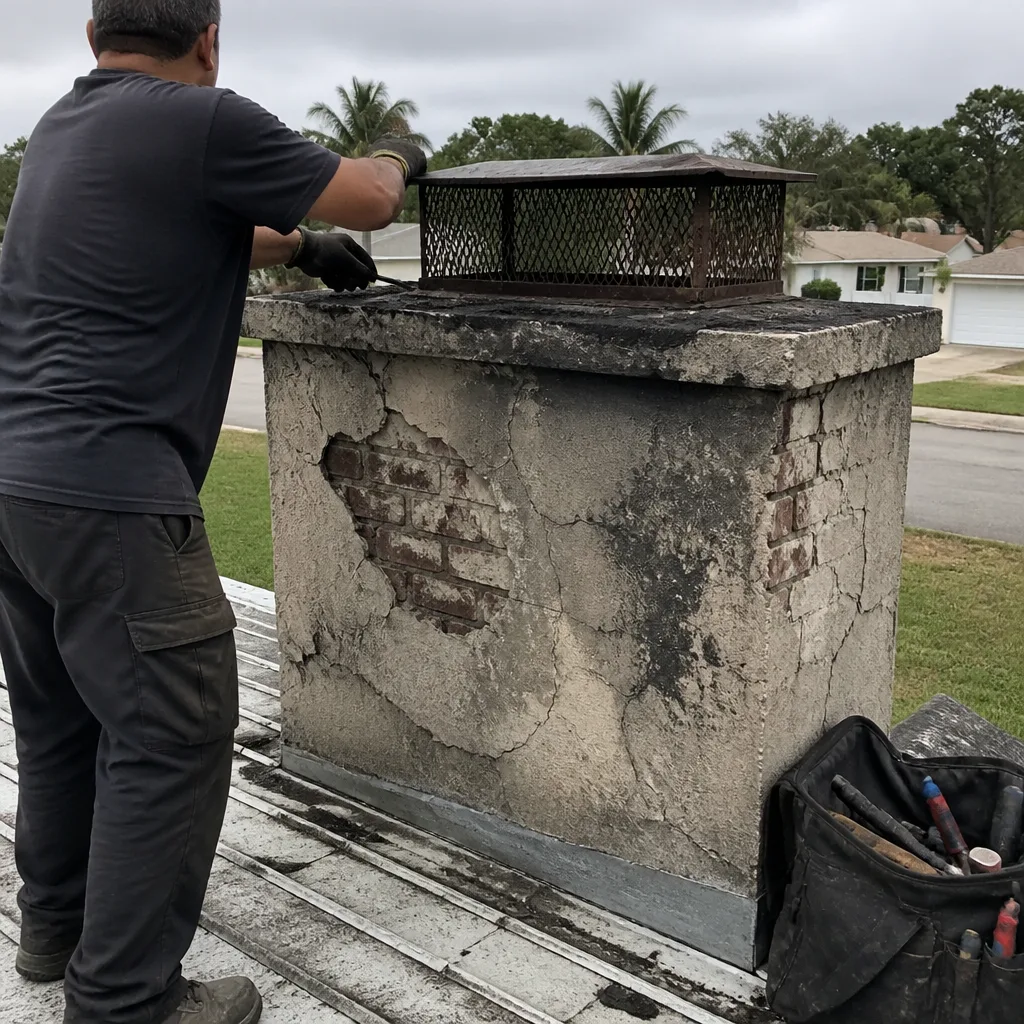 Before
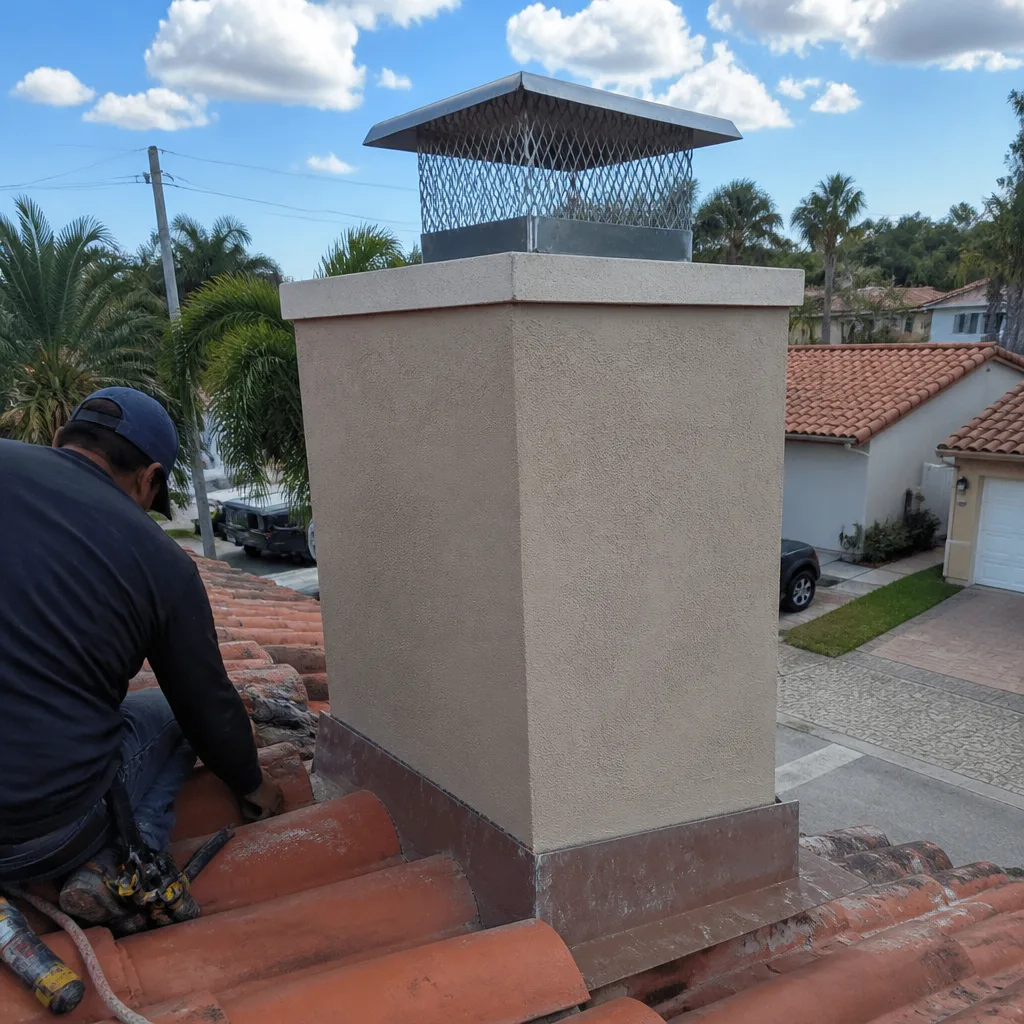 After
After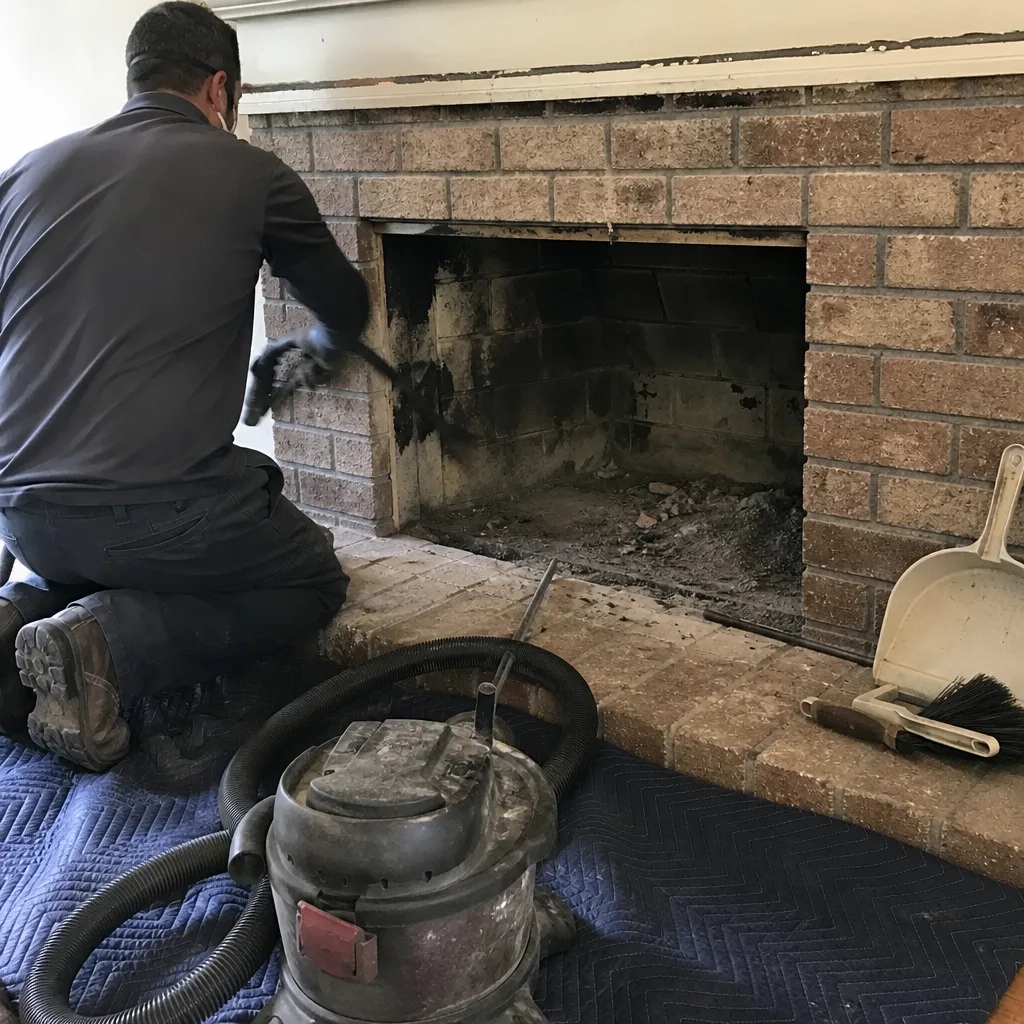 Before
 After
After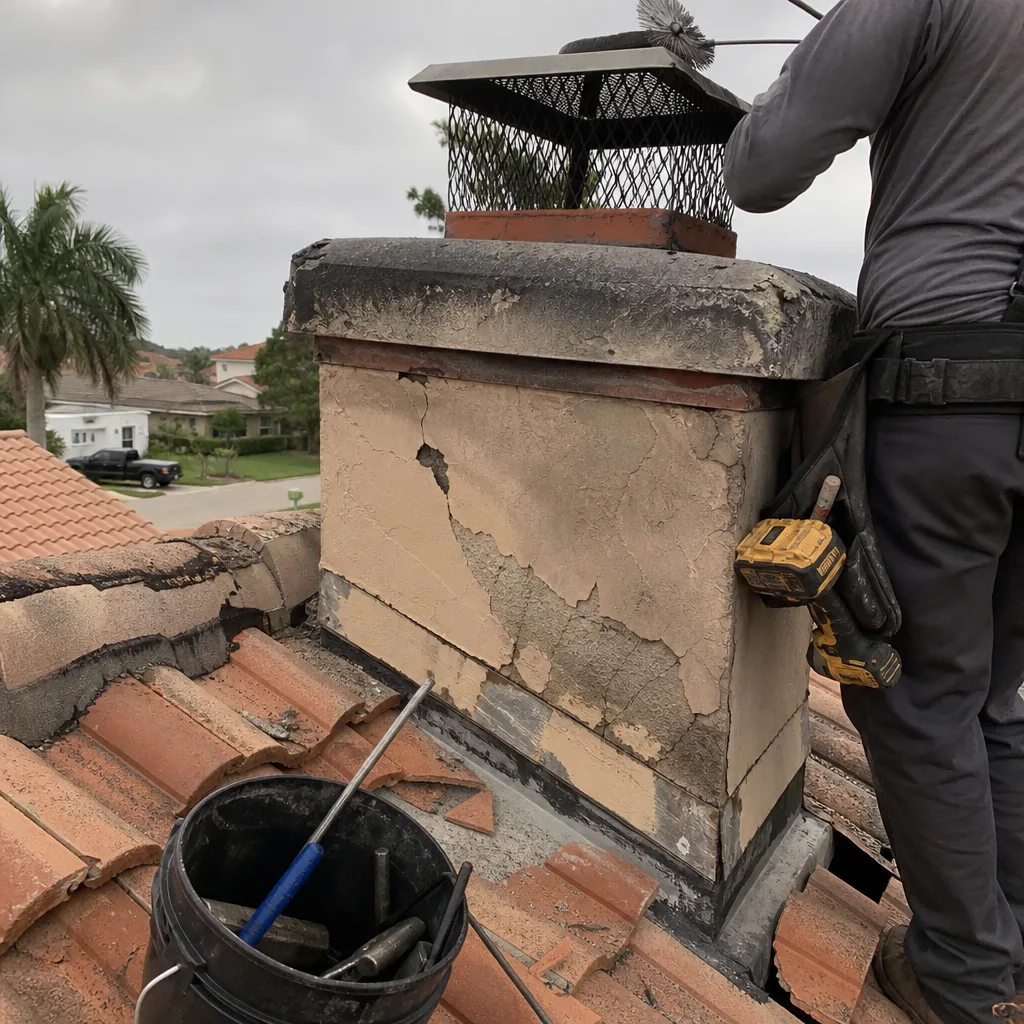 Before
 After
After