
Last updated October 15, 2026
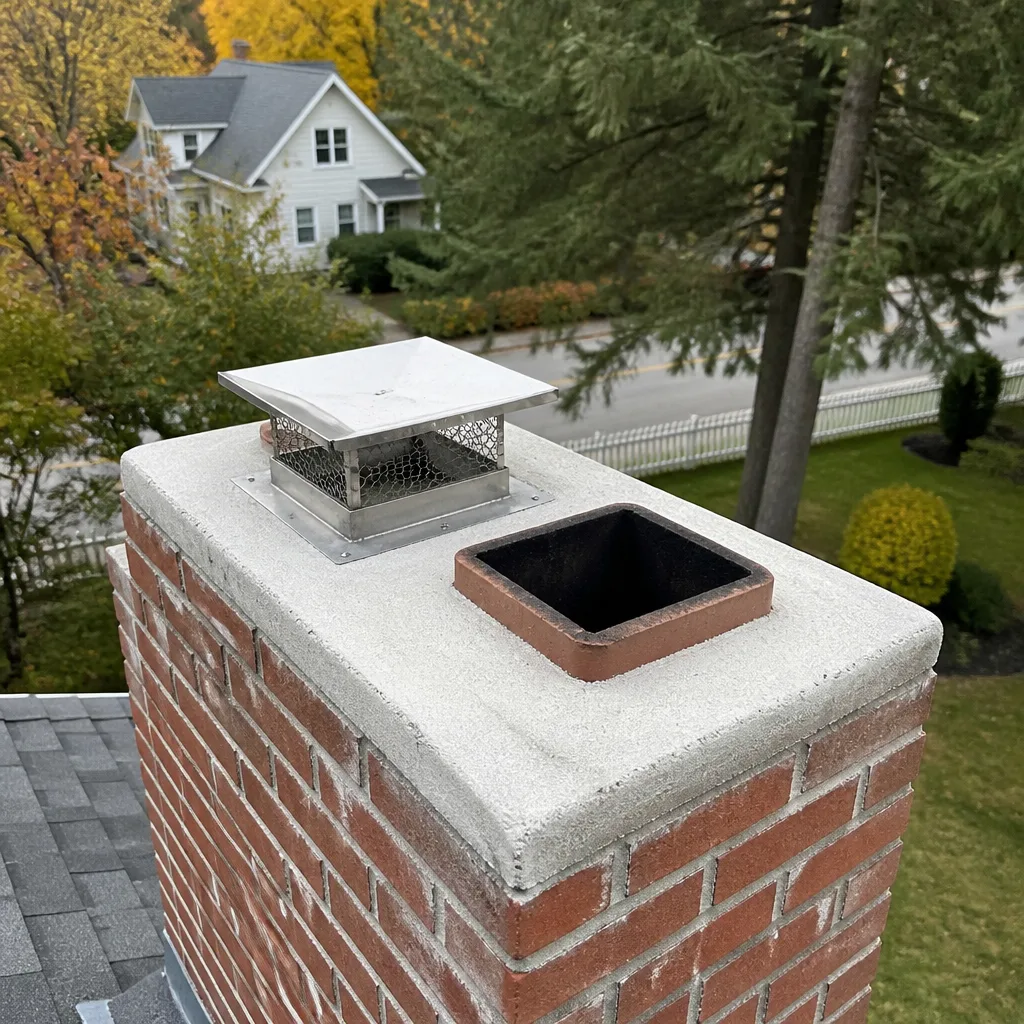 Sweep & inspection
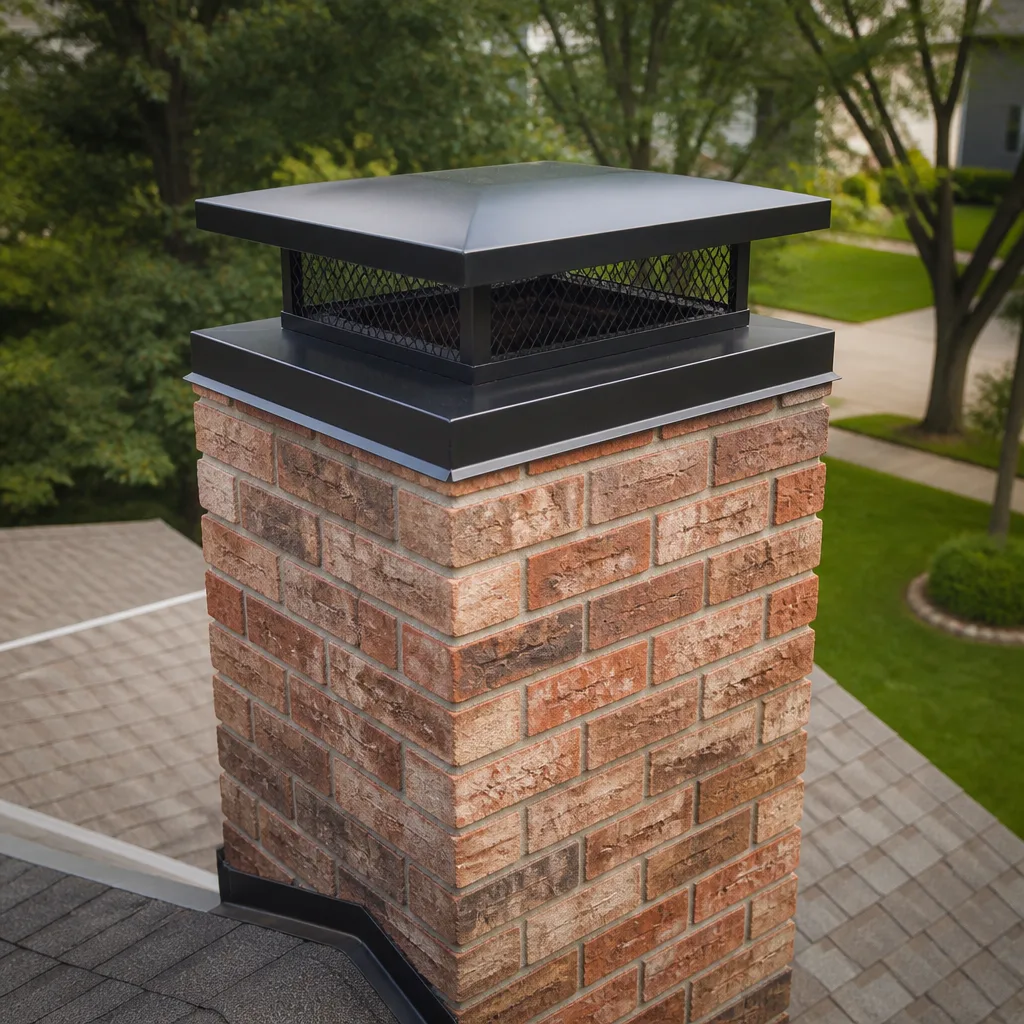 Caps & crowns
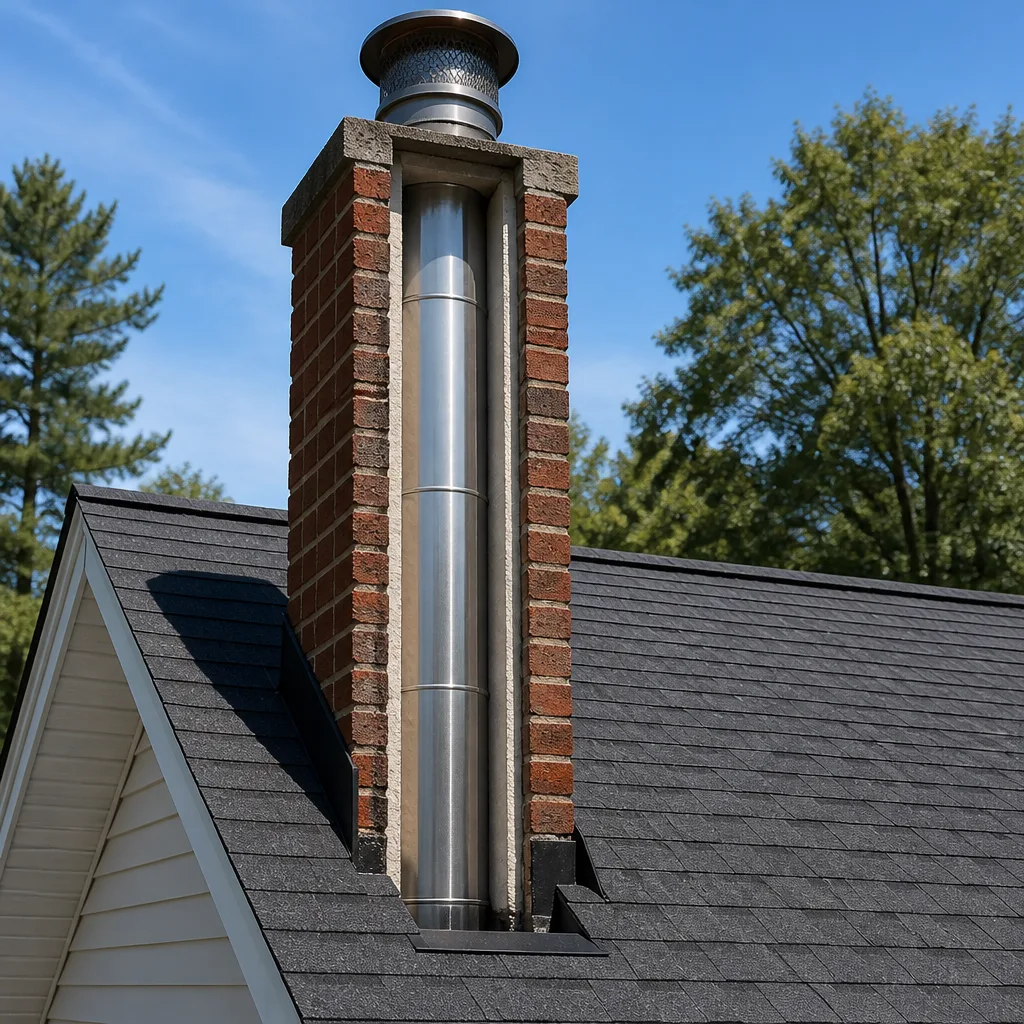 Flue relining
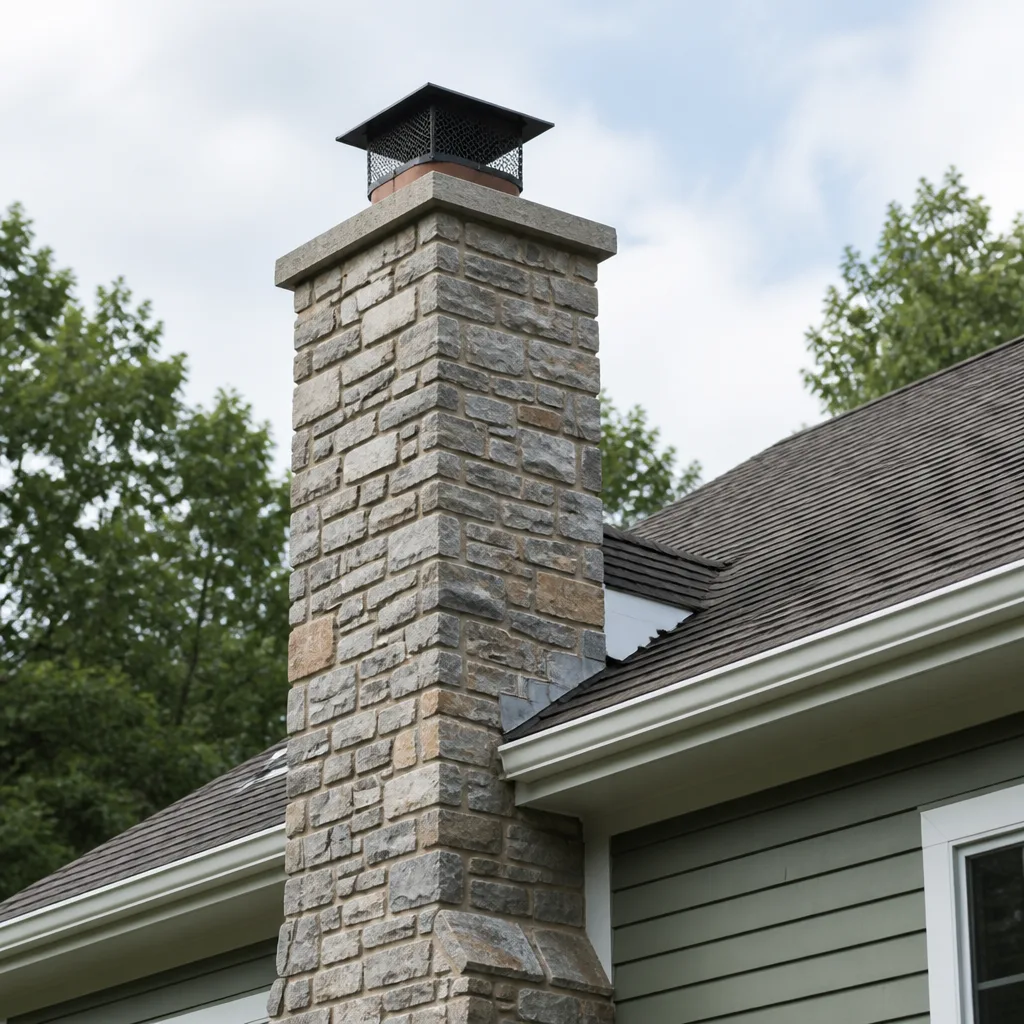 Masonry repair
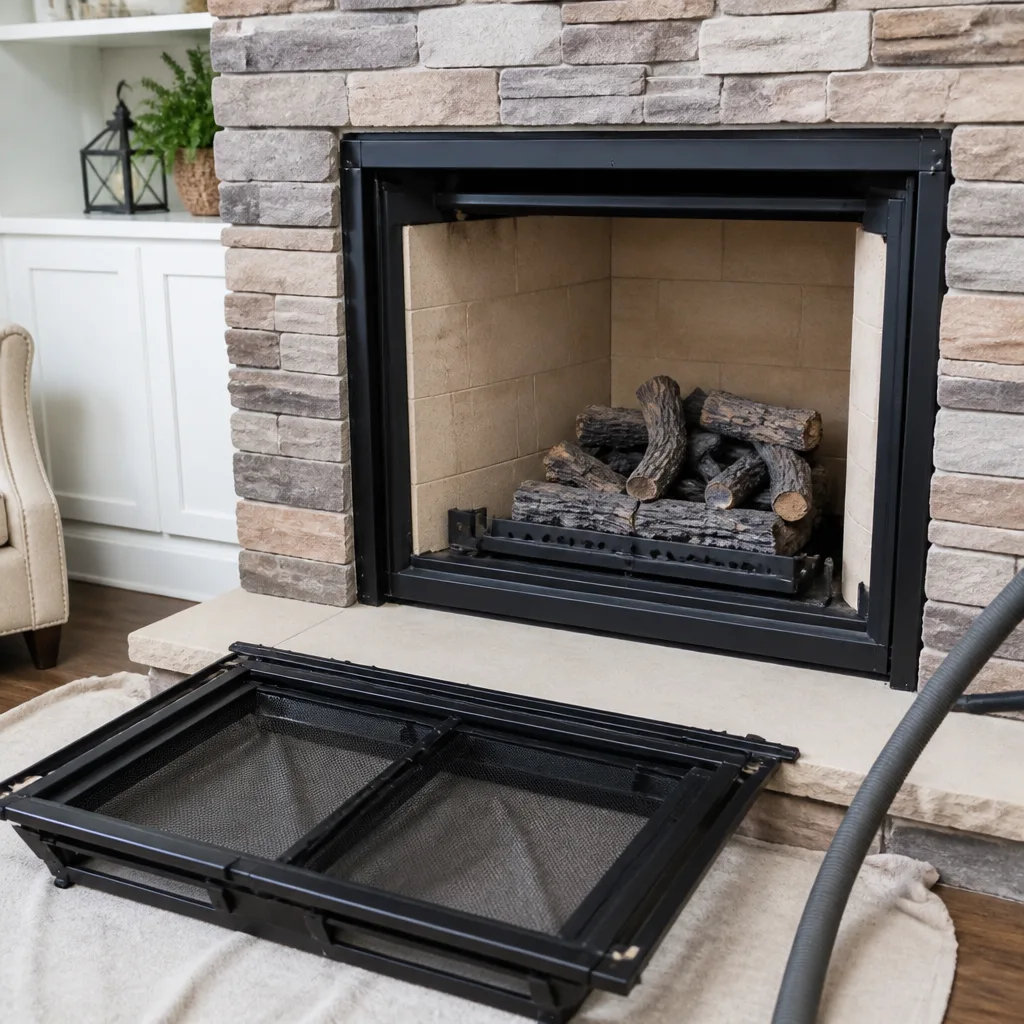 Gas fireplace service
Level 1 sweep and inspection to the NFPA 211 annual standard - flue, crown, cap, and flashing checked and photographed
Chimney sweep logs do not sweep chimneys. They loosen some creosote - which then falls where a brush and vacuum still have to collect it.
Chimney Cleaning Permits, Codes & Inspections in FL: What You Need to Know
A chimney sweep finds a cracked terracotta liner, recommends a stainless steel relining for $2,400, and schedules the work for next week. What they sometimes forget to mention: in Palm Beach County, that relining requires a building permit, and if it’s done without one, your homeowner’s insurance may not cover a subsequent fire. Most West Palm Beach homeowners only learn this after the fact, which is exactly the wrong time. This guide draws the precise line between routine maintenance and permitted work under the Florida Building Code, walks through what inspectors actually look for, and shows you how to pull the records that protect you when you sell the house. For more, see our Complete Guide to Chimney Cleaning in West Palm Beach.
Styles & brands we work with
Quick Answer
A standard chimney sweeping or visual inspection in Florida requires no permit. The moment the work crosses into repair, relining, crown rebuilding, or structural alteration, Florida Building Code Chapter 10 and local Palm Beach County amendments typically require a permit, and the homeowner is responsible for confirming one was pulled.
Table of Contents
- Maintenance vs. Permitted Work: Where the Line Actually Is
- What Florida Building Code Chapter 10 Says About Chimneys
- Palm Beach County Permit Requirements and Local Amendments
- How NFPA 211 Shapes Florida Chimney Inspections
- When Florida Law Requires a Level 2 Inspection
- How to Verify a Permit Was Pulled (and What to Do If It Wasn’t)
- What Unpermitted Chimney Work Means When You Sell or Buy
- Common Mistakes to Avoid
- When to Call a Professional
- Frequently Asked Questions
- The Bottom Line
Maintenance vs. Permitted Work: Where the Line Actually Is
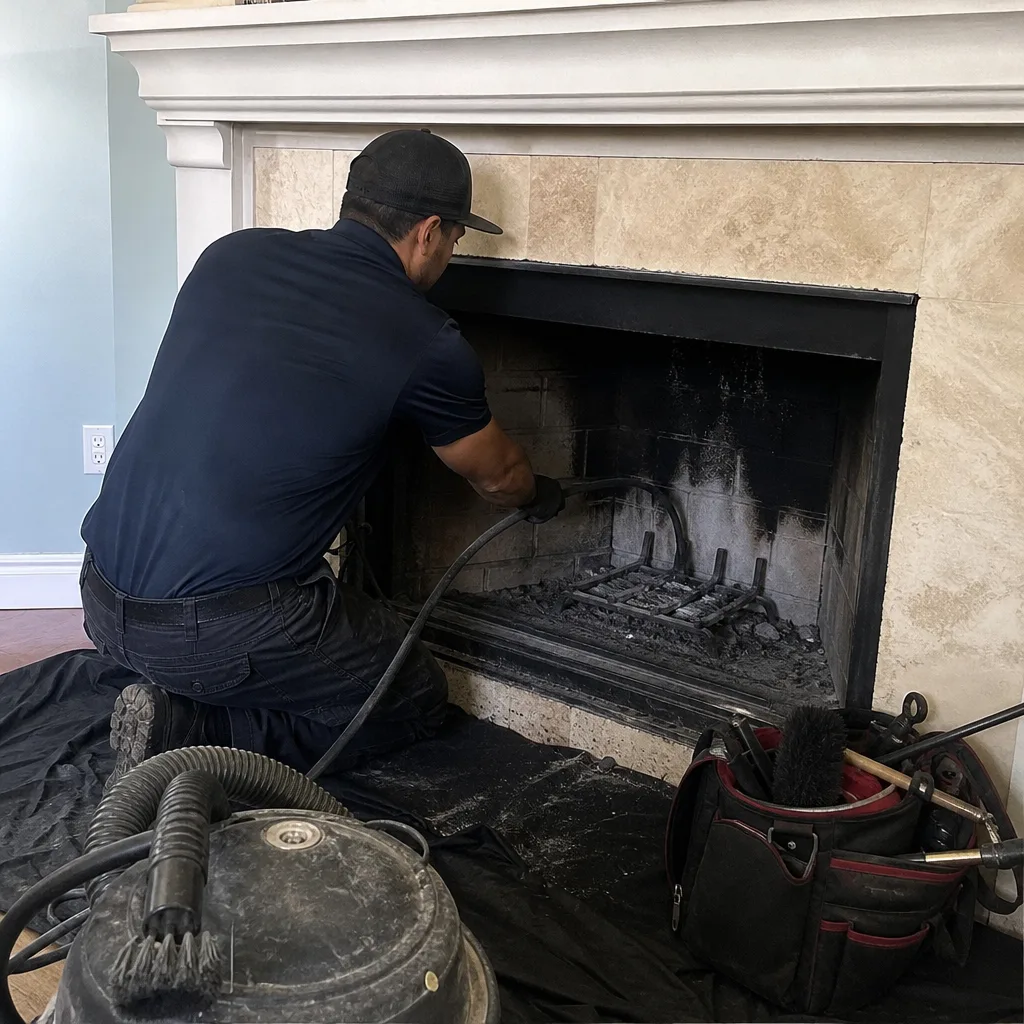
Here’s the practical distinction that matters for your wallet and your insurance policy. Routine maintenance means cleaning, sweeping, and visual inspection. These remove what’s already inside the chimney: soot, creosote (the tar-like, highly flammable residue that builds up when wood burns incompletely), bird nests, and loose debris. No structural change occurs, so no permit is required anywhere in Florida. A standard chimney sweep in West Palm Beach falls into this category, and that’s exactly what most homeowners need on an annual or biannual basis.
Permitted work begins the moment something gets repaired, replaced, or altered. The Florida Building Code classifies these as “alterations” rather than maintenance. Here’s the matrix that matters:
| Service | Classification | Permit Required in West Palm Beach? |
|---|---|---|
| Chimney sweeping / cleaning | Maintenance | No |
| Level 1 or Level 2 visual inspection | Maintenance | No |
| Chimney cap replacement (like-for-like) | Minor repair | Usually no |
| Chimney cap installation (new, none existed) | Alteration | Yes |
| Flue tile replacement (single tile) | Repair | Yes in Palm Beach County |
| Stainless steel liner installation (DuraFlex, HeatShield, similar) | Alteration | Yes |
| Crown rebuilding | Repair/Alteration | Yes |
| Masonry repointing (cosmetic, under 25% of face) | Maintenance/Repair | Often no |
| Firebox reconstruction | Alteration | Yes |
| Chimney tear-down and rebuild | New construction | Yes, full permit |
The line moves slightly depending on municipality. Unincorporated Palm Beach County treats liner installation as an alteration requiring a permit. The City of West Palm Beach follows the Florida Building Code with amendments that likewise require permits for any relining, crown work beyond cosmetic sealing, and structural masonry repair. What surprises most homeowners is that there’s no blanket exemption for “small” jobs. A single flue tile replacement may seem minor, but it touches the fire safety envelope of the home, and that’s precisely when the code wants an inspector involved.
What Florida Building Code Chapter 10 Says About Chimneys
Chapter 10 of the Florida Building Code, Residential Volume, governs chimneys and fireplaces. The relevant sections covering chimneys are 1001 through 1005, with section 1001 spelling out general requirements. The code is structurally simple but functionally demanding: every chimney must be constructed to contain and convey combustion products safely to the exterior without creating a fire hazard to the building structure.
What this means in plain English: the code doesn’t care how your fireplace looks. It cares about three things. First, clearance to combustibles. The chimney must maintain specific distances from wood framing, insulation, and other materials that can catch fire, and this is measured both vertically and horizontally. Second, structural integrity. The liner, crown, and masonry must be intact enough to do the job. Third, proper termination. The chimney must extend high enough above the roofline to establish proper draft and prevent embers from landing on the roof. Florida’s flat and low-slope roof profiles common in West Palm Beach ranch homes and mid-century builds create specific clearance issues, since termination height is calculated relative to roof pitch and surrounding obstructions like parapet walls or nearby roof peaks.
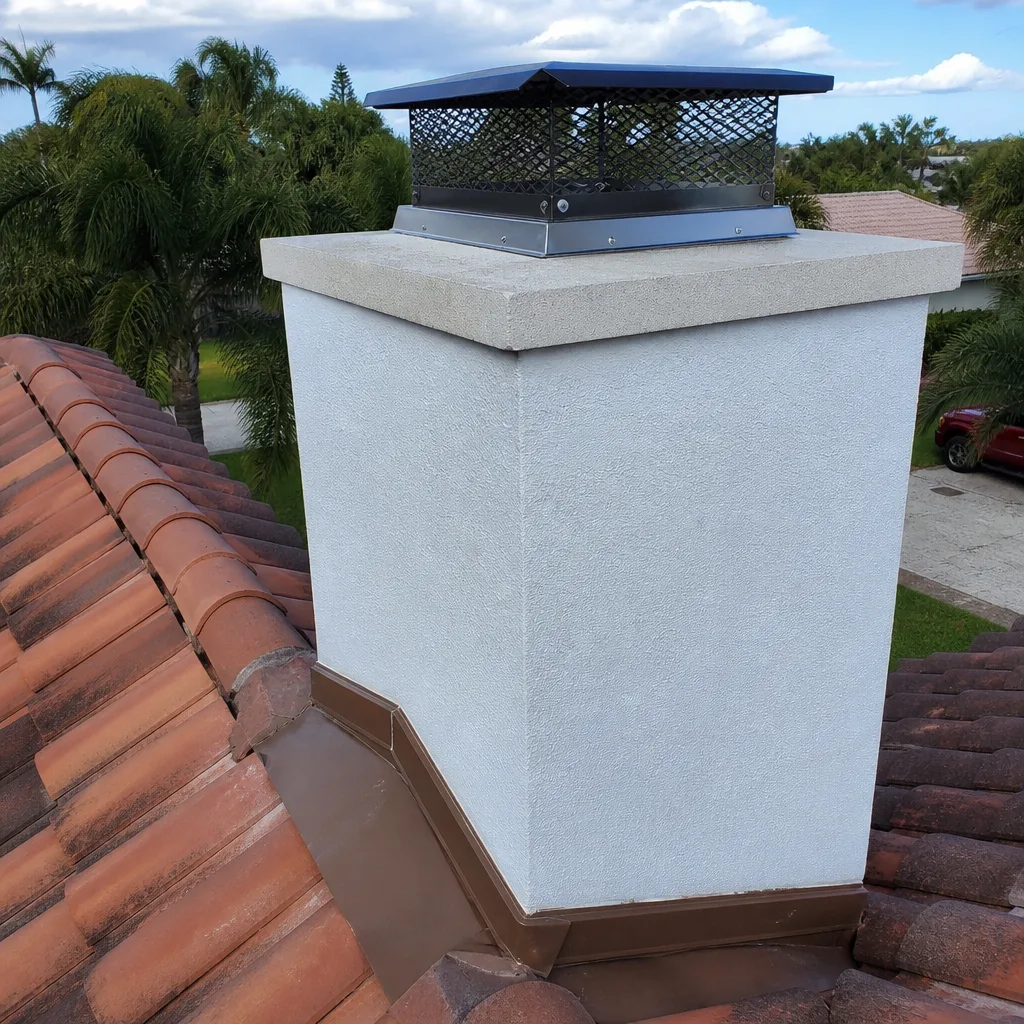
One Florida-specific wrinkle: hurricane provisions. Section 1001 ties into the high-velocity hurricane zone requirements in Miami-Dade and Broward, but Palm Beach County sits in the wind-borne debris region, which means chimney caps, shrouds, and exposed metal components must be mechanically fastened to withstand uplift. A $90 box-store cap that’s just friction-fitted may not satisfy code in West Palm Beach’s wind zone. Professional trade brands like Famco, Copperfield, and Gelco manufacture caps and termination fittings designed and tested for these uplifts, and that’s one reason a reputable chimney company specifies them.
Palm Beach County Permit Requirements and Local Amendments
Palm Beach County operates its own building department through the Planning, Zoning and Building Department, and it adopts the Florida Building Code with local administrative amendments. The practical effect: permit thresholds and process details vary from the state baseline, and the county has a reputation for enforcing chimney permits more consistently than some neighboring jurisdictions.
Here’s what to expect if you’re pulling a permit for chimney work in West Palm Beach:
- Your contractor (or you, if acting as owner-builder) files an application through the Palm Beach County online permit portal, ePermits OneStop, or in person at the building department.
- For liner installation or crown rebuilding, you’ll typically need a simple drawing or manufacturer specification sheet showing the product being installed, its UL listing, and the existing chimney condition.
- Permit fees run roughly $80 to $200 for a typical residential chimney repair, depending on the declared value of the work. A full relining with a DuraFlex or HeatShield system usually falls at the higher end.
- Once issued, the permit requires at least one inspection. The inspector verifies the liner is properly sized, connected, and terminated, and that the chimney system is code-compliant before the job is closed.
- If the work is structural (firebox rebuild, full crown replacement), expect additional inspections at stages defined by the permit.
The key thing to understand: the permit is the homeowner’s protection, not a tax. It creates an official record that the work was inspected and deemed safe. That record becomes important when you sell the house, file an insurance claim, or refinance. It also prevents the classic “he said it was fine” dispute where a contractor did unpermitted work and no third party ever verified it.
How NFPA 211 Shapes Florida Chimney Inspections
NFPA 211 is the National Fire Protection Association standard for chimneys, fireplaces, vents, and solid fuel-burning appliances. Florida inspectors use it as the baseline for chimney system compliance during new construction and post-repair inspections. It’s not a building code in itself, but Florida’s code references it and inspectors apply its requirements to everything from liner materials to termination heights.
What NFPA 211 does is define the three levels of chimney inspection, and this matters because they determine what a technician is legally able to evaluate and when that deeper inspection is required.
Level 1 inspection covers the readily accessible portions of the chimney: the firebox, damper, and visible exterior. This is what you get during routine maintenance when nothing has changed about the system and no event has occurred. A standard chimney sweep usually includes this level of visual check.
Level 2 inspection includes everything in Level 1 plus a camera or video scan of the entire flue interior, along with attic, crawlspace, and roof access where applicable. A Level 2 is required by NFPA 211 after property transfer, after a documented chimney fire or weather event, after changes to the heating system or fuel type, and before relining. This is why our chimney inspections in West Palm Beach always include a camera scan. We’ve seen cracked liners, missing mortar joints, and even a surprising number of animal nests that are invisible from the firebox but obvious on camera.
Level 3 inspection involves removing components like crown material, masonry, or interior wall surface to access concealed areas of the chimney. Level 3 is required only when a Level 1 or Level 2 suggests a serious concealed hazard that cannot be resolved without destructive access. In practice, a Level 3 happens when we find something deeply wrong during a camera scan and need to open up part of the structure to assess it fully.
For Florida inspectors reviewing permitted work, NFPA 211 also addresses the clearance to combustibles, the sizing of a new liner to the appliance it serves, and the required termination heights above roofline. If those requirements are not met, the inspector can fail the inspection and require corrections before the permit is closed.
When Florida Law Requires a Level 2 Inspection
Florida does not have a standalone statute that says “thou shalt get a Level 2 inspection before selling your home.” What it does have is the Florida Building Code’s adoption of NFPA 211, and NFPA 211 is unambiguous: a Level 2 inspection is required under three specific circumstances.
First, real estate transfers. When a home changes hands, NFPA 211 expects the chimney to be inspected at Level 2. In practice, many real estate transactions in West Palm Beach skip this unless the home inspector flags something or the buyer’s inspector specifically requires it. A standard four-point inspection for insurance will note that the fireplace exists, but it will not include a camera scan of the flue interior. That leaves a real gap: the most expensive problem a chimney can have, a hidden liner failure, is exactly what the standard home inspection misses.
Second, documented events. If the chimney has experienced a chimney fire, a lightning strike, or a severe weather event that could have damaged the structure, a Level 2 inspection is required before the system is used again. Florida’s hurricane season is the relevant local trigger here. After a Category 1 or stronger storm passes over West Palm Beach, the chimney crown, cap, and flashing can take real damage. If we see cracks or displacement after a named storm, we recommend a Level 2 before the first fire of the cool season.
Third, fuel-type changes. If you convert a wood-burning fireplace to gas, or switch from one fuel to another, the chimney system must be re-evaluated at Level 2. The liner that worked for wood smoke is not necessarily correct for gas exhaust, and the clearances, termination, and draft requirements change. This is a common source of trouble in older West Palm Beach homes where gas fireplace repair work has been done without thinking through the chimney as a connected system.
One more real-world trigger: insurance claims. After a chimney fire, even a small one, many insurance carriers in Florida require documentation of a professional inspection and proof that repairs were permitted before they’ll renew or pay a subsequent claim. We’ve seen homeowners in West Palm Beach have a chimney fire, clean it up quietly, and then discover months later that their carrier won’t cover another incident because there was no inspection record. That’s an expensive lesson.
How to Verify a Permit Was Pulled (and What to Do If It Wasn’t)
Verifying a permit in Palm Beach County is straightforward if you know where to look. Here’s the step-by-step process:
- Go to the Palm Beach County Planning, Zoning and Building Department website and open the ePermits OneStop portal or the permit search function.
- Search by address. The portal will return all permits associated with that property, including closed permits from prior owners.
- Look for permit types labeled “chimney,” “fireplace,” “mechanical,” “alteration,” or “repair.” A chimney liner installation should appear as a permit with those keywords or with a description mentioning the chimney.
- For each permit, check its status: open permits mean the work was never final-inspected and closed. That is a problem, since open permits can block a sale and can indicate incomplete work.
- If you see work you believe happened but no corresponding permit, you have found an unpermitted improvement. Bring this to a qualified chimney professional for assessment.
What to do if prior work shows up unpermitted: first, don’t panic. An unpermitted liner from a previous owner is common, and it is fixable. The path is to schedule a Level 2 inspection to establish the current condition of the system. If the liner is sound and code-compliant, you may be able to seek an after-the-fact permit, which carries a higher fee but does create a legal record. If the liner is compromised, the correct move is to replace it with a permitted installation. That second path is more expensive, but it is the only one that leaves you with a clean record.
We’ve helped West Palm Beach homeowners navigate this exact situation after buying a home and discovering the prior owner replaced the chimney cap or installed a liner without a permit. The buyer inherits the unpermitted work, and in some cases the buyer inherits a hidden defect that only a camera scan reveals.
What Unpermitted Chimney Work Means When You Sell or Buy
Florida’s real estate disclosure requirements are built around the seller’s knowledge of latent defects. Here’s the uncomfortable truth: once you know about unpermitted chimney work, you cannot unknow it. If you discovered an unpermitted relining during a buyer’s inspection and the sale falls through, you are now aware of a condition that must be disclosed to the next buyer. Failing to disclose it is fraud, and it’s easily discoverable because the permit record will not exist.
The practical costs show up in three places.
Insurance. Homeowners insurance in Florida is already expensive and getting stricter. A fire that originates in a chimney with unpermitted work gives the carrier a reason to deny the claim. Many policies contain exclusions for unpermitted modifications or defective workmanship. You don’t want to test that exclusion after a $150,000 fire.
Resale. A buyer’s inspector flags what looks like a newer liner. The buyer’s lender or insurance underwriter asks for the permit record. It doesn’t exist. At that point the buyer can demand the seller correct it (pull an after-the-fact permit, likely requiring a new inspection), renegotiate the price, or walk. None of those outcomes are good for the seller.
Refinance. Lenders are increasingly running permit checks as part of the appraisal process on refinance, especially in Florida. An open permit or unpermitted alteration can delay or kill the refi until it’s resolved.
The clean solution is to keep your chimney’s paperwork in order every time work happens. When we complete a permitted repair in West Palm Beach, the homeowner receives the closed permit number and the inspection record, and that becomes part of the house file. That’s exactly the kind of certainty Alcott Chimney West Palm Beach is built around.
Common Mistakes to Avoid
- Assuming the contractor pulled the permit, and not confirming. Many contractors say they will handle it and then don’t. The homeowner is the party with the most to lose, so check the permit portal before work starts and get the permit number in writing.
- Treating a chimney cap as a purely cosmetic item. In Palm Beach County’s wind zone, a cap that isn’t mechanically fastened can blow off in a hurricane and become a projectile. If you’re installing a new cap where none existed, ask whether the permit is required.
- Skipping the camera scan. A visual look from the firebox cannot see a cracked liner mid-flue. In our experience in West Palm Beach, the most expensive repairs are the ones found late, and the camera catches them early.
- Buying a home without checking the chimney permit history. The standard home inspection won’t include a flue scan, and the four-point won’t flag unpermitted liner work. A ten-minute permit search can save you a $3,000 surprise.
- Burning before a post-repair inspection. After any repair or relining, the system should be inspected before first use. Building a fire the same day the liner goes in is how you turn a fix into a failure.
- Ignoring an open permit. An open permit on your property record can block a sale, a refi, or an insurance renewal. Closed permits are the goal; open permits are a liability.
- Hiring the cheapest sweep and treating it as equal to a professional inspection. A $79 sweep-and-go from a flyer won’t include a camera scan, a code check, or a written condition report. Cheap gets expensive when the unseen crack finally lets go.
When to Call a Professional
Call a professional when you see white staining on the exterior masonry (efflorescence), smell smoke in the house after the fire is out, notice the damper doesn’t seat tightly, or haven’t had a camera scan done in more than two years. Call immediately if you’ve had a chimney fire, a lightning strike near the home, or a hurricane pass through West Palm Beach and you haven’t had the chimney checked since. And call before you buy or sell a home with a fireplace, because the permit record and the camera record together are the evidence that keeps everyone honest. Alcott Chimney West Palm Beach offers free estimates in West Palm Beach, and as part of the Alcott Chimney West Palm Beach home service family, every job includes a written price before work begins and a written guarantee on every repair. Call (728) 203-8687 to schedule.
Frequently Asked Questions
No permit is required for chimney cleaning or sweeping anywhere in Florida, including West Palm Beach and Palm Beach County. Cleaning is classified as maintenance, not as an alteration, so no building permit is triggered. The permit question only arises when cleaning reveals damage that needs repair, such as a cracked liner or deteriorated crown.
A standard chimney sweep in West Palm Beach typically runs $180 to $320 before any repairs, depending on the flue type, access, and whether the homeowner wants a camera inspection included. Gas fireplaces tend to be on the lower end. If the sweep is priced below $100, it’s usually a loss-leader without a real inspection component. Call (728) 203-8687 for an exact quote; estimates are free.
Sometimes yes, sometimes no. A cracked clay tile liner in a wood-burning chimney is a fire risk, since cracks expose combustible framing to heat and allow creosote to accumulate in hidden spaces. But not every crack requires a full relining. A camera inspection with a written report is the only honest way to know whether a liner can be repaired, resurfaced with a system like HeatShield, or needs full replacement. Ask for the camera video before you agree to any liner work.
For a wood-burning fireplace used regularly during Florida’s short cool season, NFPA 211 recommends a sweep and Level 1 inspection when creosote reaches 1/8 inch of buildup, which for most households means annually. Gas fireplaces can usually go two to three years between service calls. The name-and-photo technician preview we provide is part of that service: you know exactly who is coming and when.
The most likely consequence is hidden creosote buildup or a liner problem that compounds over time. The less likely but more serious consequence is a chimney fire. Florida’s warm climate means chimneys go unused for months at a time, and animals move in. We regularly pull bird nests, dead rodents, and the occasional raccoon den out of West Palm Beach chimneys that haven’t been inspected in years.
Yes. Palm Beach County’s ePermits OneStop portal lets you search your address for all permits, including open ones. If a previous owner had chimney work done and the permit was never final-inspected, you’ll see it as open. That’s your cue to schedule a professional inspection and resolve the record before you sell, refi, or have a fire.
The Bottom Line
Chimney cleaning in Florida needs no permit. Everything that comes after it, from liner installation to crown rebuilding, often does, and the homeowner carries the risk if no one checks. The smart play is simple: treat every repair recommendation with a healthy dose of verification, insist on a camera scan, confirm the permit before work starts, and keep the closed permit in your house file. In West Palm Beach, where wind, humidity, and a short burn season create their own set of chimney problems, a clean record is worth as much as a clean flue. Alcott Chimney West Palm Beach has been serving West Palm Beach since 2002 with the certainty homeowners deserve: a written price before every job, a written guarantee on every repair, and a technician whose name and face you see before the doorbell rings.
Written by Ruben Castellano, Owner at Alcott Chimney West Palm Beach, serving West Palm Beach since 2002.
See the difference
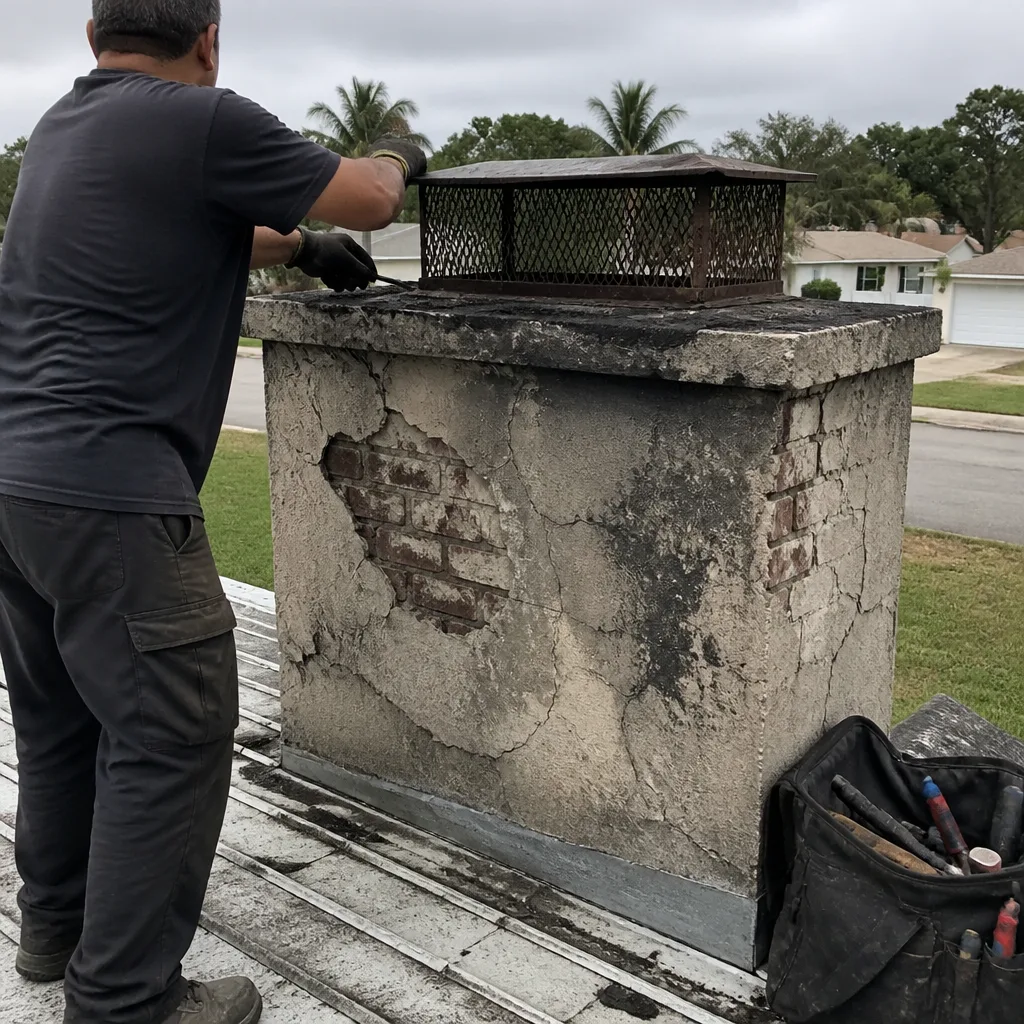 Before
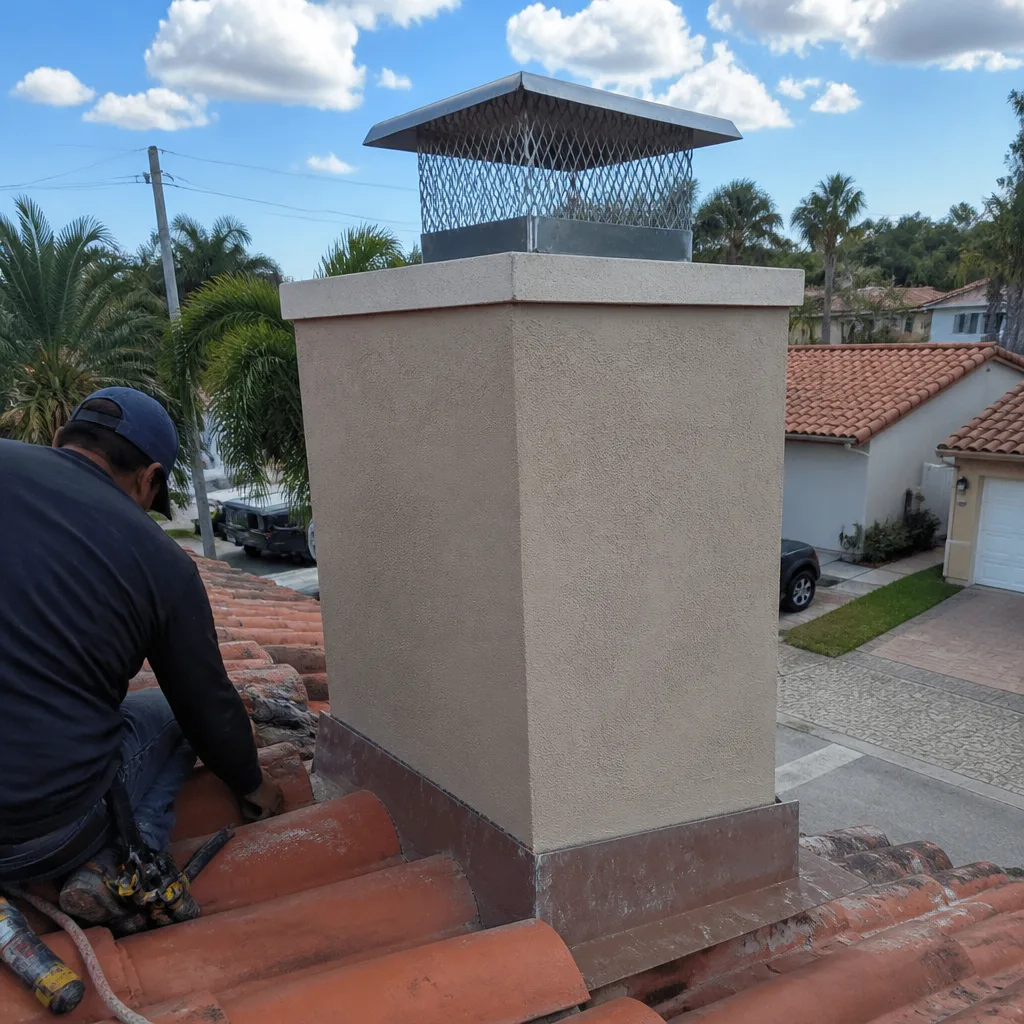 After
After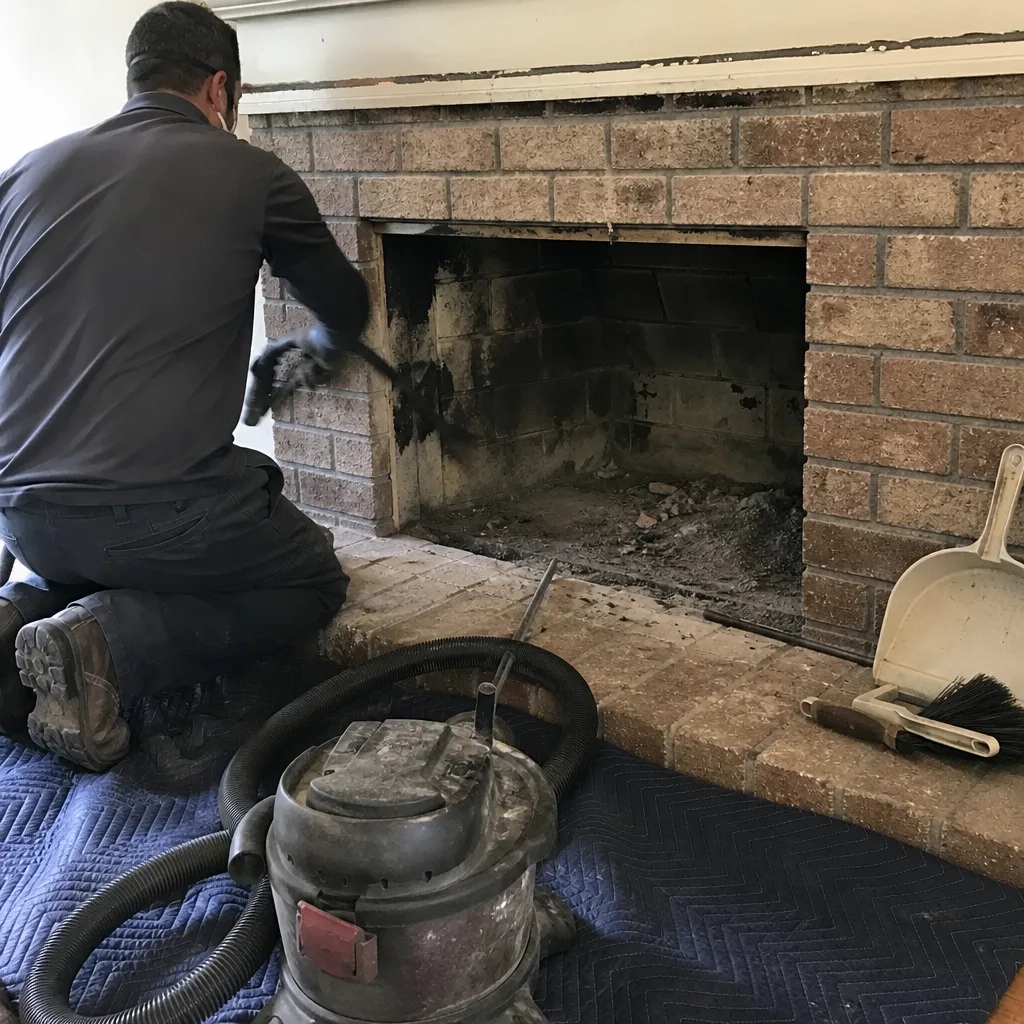 Before
 After
After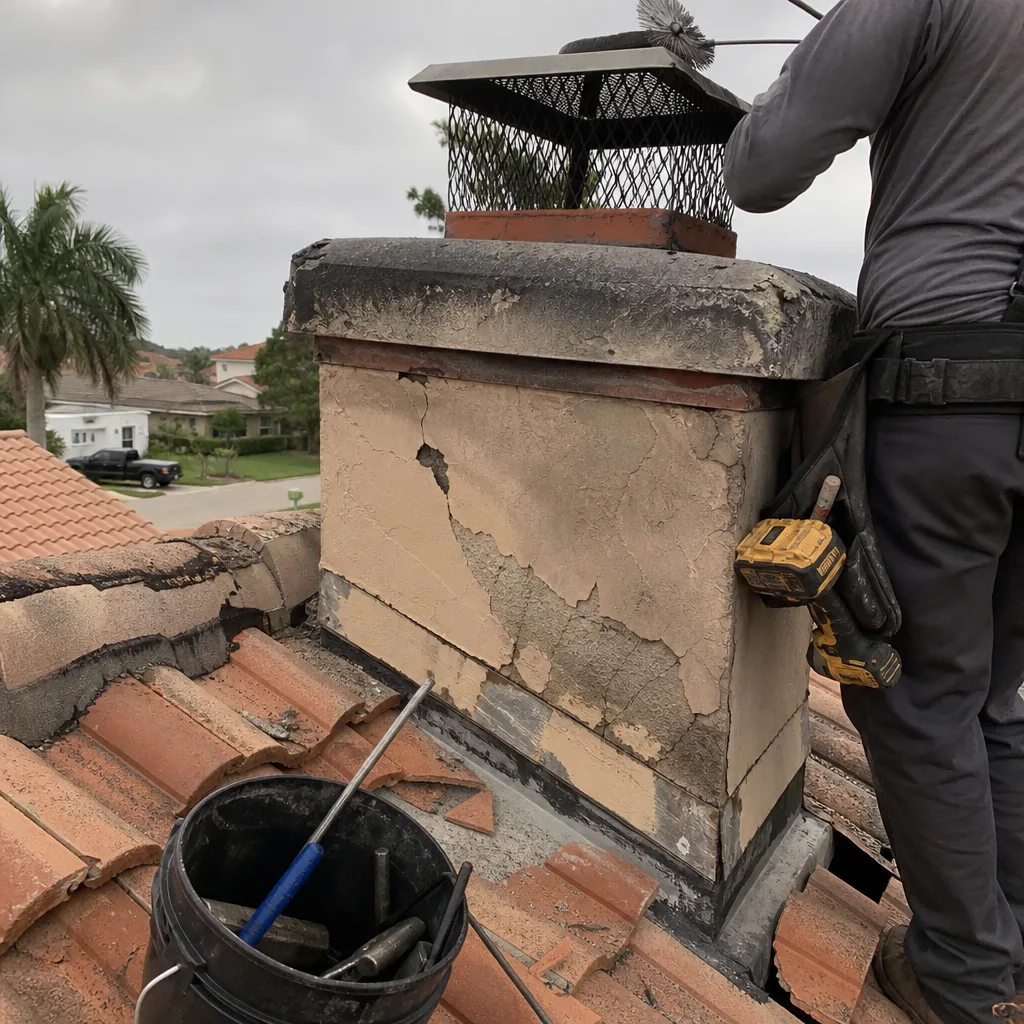 Before
 After
After